


Search
10 results found
Biodiversity Knowledge Hub
Biodiversity
Guide on Finding the Best Maid Agency in Singapore
05 Nov 2020


It can be tough balancing a busy career with family responsibilities. Besides finding a helper that fits in with your family, there is just so much paperwork and legislation that accompany the hiring process.
That's why many turn to maid agencies to help with the hiring.
But here's the thing - there are thousands of maid agencies in Singapore, ranging from well-established companies in multiple countries to fly-by-night operations that are deceptive to both the helper and employer alike.
How do you find the right one?
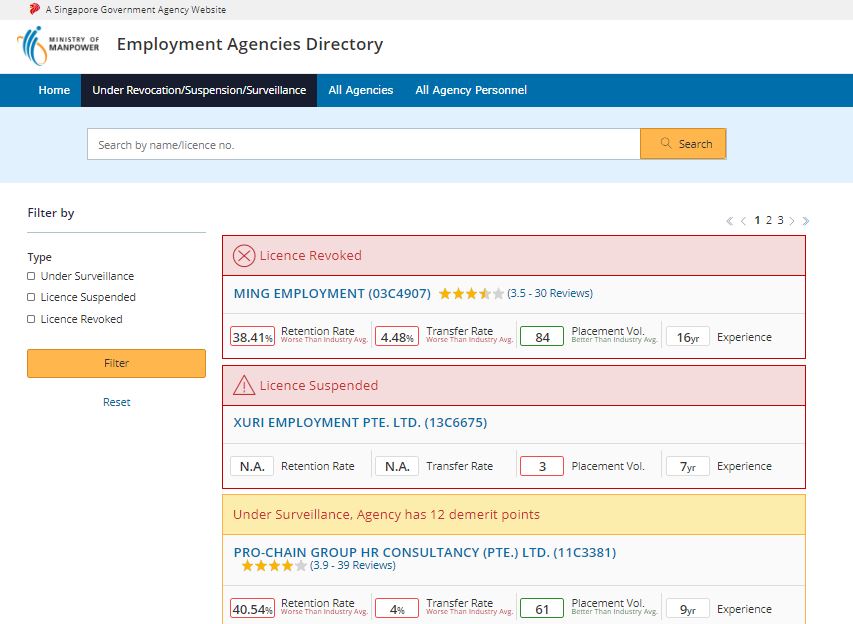
For a start, the Ministry of Manpower (MOM) has an extensive database you can refer to find the best maid agency in Singapore that can meet your preferences and needs. You can not only search for the agency by name but also find maid agencies in Singapore based on ratings and avoid those on MOM's watchlist.
Let's get down to helping you find a reliable maid agency and the best helpers.
Factors Taken Into Account When Choosing a Maid Agency
When you're giving someone the keys to your home and placing your children's lives in their hands, it makes sense to be more stringent with your selection of maids. Similarly, you would also want to be extra careful when selecting a maid agency to ensure you get the best selection of maids and advice. Here are some things to look out for.
-
Experience
While experience doesn't necessarily equate to quality, it's a good gauge. Maid agencies with an active Singapore license for more than five years is a good indicator they won't shut down without warning after you've made payments and leave you hanging.
-
Placement Volume Over a Given Period
Placement volume is the number of Foreign Worker (FW) work passes approved for the agency in 1 year. The higher the placement volume, the more helpers are being matched with employers.
On the surface, high placement volume means the maid agency is doing relatively well.

-
Transfer Rate
The transfer rate is the percentage of Foreign Domestic Workers (FDWs) placed by the agency who have transferred to 3 or more employers within one year.
Jun 29, 2019 - Jun 28, 2020, Industry Average: 1.53%
So it's better to look at maid agencies with a transfer rate lower than that. A low transfer rate might mean that the company probably has higher quality helpers or can execute better maid to employer matching.

-
Retention Rate
Retention rate is the percentage of FDWs placed by the maid agency who have stayed with the same employer for at least one year.
Jun 29, 2019 - Jun 28, 2020, Industry Average: 44.98%
The higher the retention rate, the better it is. A higher rate shows that employers are satisfied with the helpers recommended to them and have stayed with the agency for more than a year.
But do note that you might come across an agency with only one successful placement, attaining 0% transfer rate and 100% retention rate. Metrics like these aren’t an accurate depiction of the company’s reliability.

-
Ratings and Reviews
For an overview of online reviews, you can look at the MOM EA directory, where licensed maid agencies are rated. The MOM website is the best place to get fair reviews, usually from other employers in Singapore.
-
Demerit Points
When maid agencies in Singapore violate any of the Employment Agencies Act rules, they are issued demerit points. A maid agency with 12 or more demerit points will be placed under surveillance for 12 months.
Violations of MOM's rules can be seen as being uncooperative, and there are clear grounds for distrust in services provided by these maid agencies.
How to Better Qualify the Best Maid Agency?
There's a high chance that after comparing the various metrics, you're still stuck with multiple maid agencies.
Singapore mostly has maid agencies that will provide you with the essential maid employment services (sourcing, basic pre-employment training and matching). But sometimes, it's not good enough. The best maid agencies in Singapore will make the process as seamless and hassle-free as possible.
When qualifying maid agencies in Singapore, find out their screening process first. Without proper screening, you run the risk of being assigned a helper who's not a good fit for your needs. Then enquire about the following:
Advanced training
- Prepare and enhance your helper's skills in infant and pregnancy care, temporary/disability care, or looking after the elderly.
- Have peace of mind knowing she's well-equipped to give the best care to your loved ones even when you're not home.
Maid insurance
- Get comprehensive coverage for medical, liability, and other accidents related to your helper.
Employment paperwork and processing
- Work permit applications, cancellations, passport renewals, document endorsements by your helper's country embassy, and other processing can be complicated.
- The agency knows how to get it done right and quickly, so leave the tedious work to them and focus on giving your family the best.
Licensed
First and foremost, only engage with licensed maid agencies. Singapore maid agencies are legislated by MOM to have an employment agency license. A Certificate of Employment Intermediaries (CEI) certification is also required for their key appointment holders/other EA personnel.
Agency Fee Inclusion
It's normal for maid agency fees to be anywhere up to $2,500. So it's natural you ask, "What's included in the agency fee?"
Note about agency fees: Don't be too attracted to the low prices of agency fees. Some agencies transfer the cost from the prospective employers to the domestic helpers. Considering these FDWs are already in financial difficulty, it is best that you, the employer, consider absorbing some of those costs.
So, do check the fee that your maid has to pay the agency. By law, the fees that FDWs have to pay agents are capped at two month’s salary.
Employers are also NOT allowed to deduct agency fees from their helpers’ salaries. So, here are ten things that are typically included in the agency fees:
-
Registration of FDW
Before an FDW is allowed to work in Singapore, employment agencies must request MOM for approval to enable FDWs to enter the country.
-
Overseas recruitment fee of the FDW
Maid agencies usually have connections with source countries that supply potential hires. Part of the fees goes to finding a suitable candidate before bringing them to Singapore.
-
Air ticket
After an interview is carried out and the screening results show she is a good fit, the agency will have to fly her over for training before deployment to your home.
-
Initial medical checkup
To ensure your helper is fit to work and for your family's safety, MOM requires FDWs to undergo a mandatory medical examination within two weeks of arrival in Singapore.
The medical examination screens the helper for four types of infectious disease (tuberculosis, HIV, syphilis, and malaria) and checks if she is fit for work. For employers who want to send her for more tests, additional fees might be included.
Her Work Permit will only be issued if she passes the medical examination. Otherwise, she will have to be sent home.
-
Application fee for Work Permit and other documentations
Who can apply
Employers or appointed employment agent (EA)
How much does it cost?
Work permit application: $35
Work permit issuance: $35
How long does it take?
FDW eService: 1 week
Application form: 3 weeks
For FDWs working in Singapore for the first time, they must also attend the Settling-In Programme within three days of her arrival. There’s a $75 (including GST) fee to be borne by the employer.
Agency fees usually also include the first levy for your foreign domestic helper.
Types of levy
Monthly rate
Daily rate
Normal (1st FDW)
$300
$9.87
Normal (Subsequent FDWs)
$450
$14.80
Concessionary*
$60
$1.98
*The concessionary rate applies to families with a young child, elderly member, or person with a disability.
-
Fee-related to entry test and Safety Awareness Course
MOM regards safety as a top priority; all first-time FDWs have to attend a Safety Awareness Course. They’re instructed on precautions required for performing tasks such as cleaning windows and hanging laundry in an urban high-rise environment during the course.
First-time employers or those who change FDWs frequently have to attend a 3-hour Employers’ Orientation Programme (EOP).
Classroom EOP: $35 to $60
Online EOP: $35
-
Transfer of the maid from the airport to your home or agency
When your helper arrives in Singapore, she will need transport to her temporary place of residence or your home.
-
Medical and personal accident insurance
As part of your obligations to your helper, you must buy medical insurance and personal accident insurance for her.
MOM also states that employers must NOT pass on the cost of purchasing the insurance to their helpers.
-
Security bond
A security bond is a binding pledge to pay the Singapore government if either you or your helper breaks the law or Work Permit conditions.
All employers must purchase a standard $5,000 security bond for each helper employed unless she is a Malaysian.
Employers must NOT pass on the cost of the bond to their maid.
-
Sending maid to MOM for thumbprint scan
Just as Singaporeans need to have their thumbprints registered with ICA, all FDWs need to have their records with MOM.
Additional Services by Maid Agency After Employment of Helper
Some of the better agencies also provide additional services after you have employed a maid successfully. While the services may differ from agency to agency, some of the more common services are:
- Renewal of work permit and passports
- Counselling of FDWs
- Replacement of FDWs
- Home leaves
Common Mistakes in Choosing a Maid Agency Singapore
The whole idea of hiring a maid agency is to make life easier for you. They will provide training and recruitment so you can have a quality and highly reliable helper quickly. They will also conduct screening of potential helpers as they know what to look out for. They will handle all the confusing paperwork and processing, so you get to save time.
As much as a maid agency has to do their job, you need to do your due diligence too. Here are the common mistakes that you should avoid when hiring a maid agency in Singapore:
Choosing the cheapest agency
Some people might be tempted to go with the cheapest maid agency in Singapore. While there's nothing wrong with saving, you don't want to end up wasting hours sending an inefficient or poorly matched applicant back.
If the agency for maid you’re looking at charges fees that are far below average, this should raise the alarm. They are either passing the fees to the maids (which is against the law in Singapore), or they’re probably scrimping on other aspects like quality of service or uninsured maids.
Dependable maid agencies in Singapore will charge you a reasonable rate. Don’t rush through the selection process!
Hiring a company not approved by the Ministry of Manpower (MOM)
Walking around shopping centres or in the neighbourhood, it’s normal to see many maid agencies. Singapore has many of those scattered around and maybe you’ve already talked to a few agents and enquired about their rates and processes. Perhaps you even like them.
But before engaging their services, check the MOM Employment Agencies Directory before proceeding any further. Don’t make the mistake of hiring a maid agency without a valid license!
You will get into trouble with the authorities if you hire the services of a maid agency that is not approved to operate in Singapore.
Not checking their online presence
Many existing employers encourage prospective employers to search for maid agencies in Singapore on social media or Google.
While a maid agency can secretly ask their maids to give them 5-star reviews on Facebook and Google, you can look out for written testimonials instead. Many satisfied customers willingly write testimonials to help others who might be in a similar situation as them in the future.
Pro tip: Ask friends and family members who have previously hired maid agencies in Singapore for recommendations. That will save you a lot of hassle and reduce your risk of engaging a subpar one.
Furthermore, a company that is willing to invest in building up their online presence shows that they’re open about their business. Working with a transparent agency is always comforting.
These are the 3 most common mistakes when hiring foreign domestic helpers from maid agencies in Singapore. Avoiding these mistakes will assist in preventing possible disagreements and unnecessary hassle.
Finding yourself the best help
With the stress of taking care of your family’s needs and other household tasks, hiring a maid quickly is essential. Some agencies can get the job done quickly, but make sure it’s appropriately done too.
Don’t forget to conduct some background checks on the agency you’re considering to ensure you don’t end up spending more time and money because of other complications down the road.
Remember, it’s not so much about finding the best maid. But more about finding the best maid for your needs and requirements.
House Rules for Maid
09 Nov 2020


Having a domestic helper is a necessity for many families in Singapore because of our busy lifestyles. It is a relationship that many cannot live without today, yet we see people taking it for granted. Having a non-family member stay with you 24/7 requires adjustments and most of all respect, from both ends. To preempt problems, it is good to address cultural differences early by setting guidelines for everyone to minimise miscommunications.
As every family and domestic helper have their traditions and habits, setting house rules can help align both parties' expectations and create a conducive working and living environment. However, joining your family and getting used to your requirements and expectations will take some time to get used to, even for the more experienced maids. So, be patient with her so she can adapt to your lifestyle quickly. Most importantly, both parties should be willing to have an open discussion and show patience and understanding.
Work Conditions and Rest Days
Although there is no regulation on working hours, the Ministry of Manpower (MOM) has provided some recommendations. As an employer, you should provide your domestic helper with adequate rest and breaks during working hours.
It would be unreasonable to expect her to be tending to household chores continuously throughout the day. But, on the other hand, neither is it fair to the employer if the domestic helper takes excessive breaks. To align on this, discuss what's a reasonable number of breaks with your domestic helper and adapt as things move along.
Accommodation, safety and privacy: As much as possible, provide your maid with a well-sheltered and ventilated room of her own. Be sure to keep it away from dangerous equipment or unsafe structures that might cause harm to her.
Motivate your maid by making her living conditions as comfortable as possible by providing the necessities, including a bed, toiletries and cabinets. You must not deduct the costs of these items from your maid’s salary.
If you do not have a spare room to offer, you can get your maid to share a room with a family member or allocate a space in your home for her to sleep. No matter the living arrangements you make, always consider her privacy and modesty by ensuring no CCTVs or video recording devices directed at her designated sleeping, changing and showering spaces. If you have such devices in your home, you must inform her of where it is.
Meals: The Ministry of Manpower requires an employer to give the domestic helper enough food to carry out daily activities. She should have at least three nutritious meals per day and sufficient hydration.
If your foreign domestic worker (FDW) has specific food requirements, be sure to accommodate this. It could be by providing her money to buy her food or allowing her to cook a separate portion for herself.
For more information, refer to MOM's official guidelines here.
Rest Day Arrangement
Your foreign domestic worker should have a weekly rest day to get enough mental and physical rest. The FDW and employer should mutually agree on the day of the week to take the rest day. To prevent future disputes, it is best to have this agreement in writing.
If for whatever reason you require your FDW to work on her stipulated rest day, you must compensate her with either 1) at least one day's salary (in addition to her basic salary) or 2) a replacement rest day that she can claim within the same month.
It is also common for employers to have concerns about what their domestic helpers do on their rest days. If you are concerned, communicate this with her openly and talk things through.
Find out more on rest day requirements, read this press release on weekly rest days by MOM.
Public Holiday Regulations
Foreign domestic helpers are not entitled to Public Holidays in Singapore.
However, employers can decide if they want to offer public holidays to their helpers following the Employment Act of Singapore. If that is the case, the contract should mention that the employer allows the helper to the 11 paid public holidays in Singapore.
Usage of Mobile Phone and Internet
Under the house rules for your domestic helper, include control on the usage of mobile phones and the internet, but be reasonable. Setting a clear timetable for your maid when she can and can't use it will ensure she stays focused during work hours. You and your family should also respect the time allocated for her to use her phone.
After all, giving her time to call back home, whether on the house phone or her mobile phone, can put her mind at ease, improve her work attitude and ensure her mental and emotional health is taken care of.
Housework Rules
Here are some examples of standard house rules and guidelines regarding housework that you can consider adding to the job description:
- Exercise care when doing any housework.
- Try to remember each family member’s food preferences.
- Do not be afraid to ask us if you do not know how to do or are unsure of doing anything
- Do not leave sharp objects and dangerous substances within reach of children.
- When cleaning the exteriors of windows, please do not do it alone as it can be dangerous.
- For groceries or household items that are about to finish, note it down so we can buy it or give you money to replenish it.
- When grocery shopping, keep receipts or note down the expenses.
Home Security and Privacy
The safety of your helper and family is of paramount importance. Therefore, spend some time explaining to your domestic helper how she needs to play her part in keeping the home safe for everyone. For example, remind her to keep the house keys properly and away from opened windows along the main corridor, bolt the door or lock the additional padlock.
If you prefer her to close all the house windows when she leaves the house to buy food or run errands, do inform her.
There could also be instances when your friends or extended family visit your home unannounced or when you are away. Let her know what she should do in such circumstances - can she invite them in or wait for you to return home or call you for permission. If you do not want her to invite her friends over, be clear from the start to avoid misunderstandings.
Observe Proper Behavior
-
Respect Employers
Show your domestic helper respect and expect the same in return. Encourage her to approach you directly if she has any concerns. If your helper feels safe and happy with her job, she will likely stay with you for some time and put in more effort into her work.
-
Treatment of your children and members of the family
Define how she should treat your family. For example, does she need to call you "Sir" or "Madam", or is it acceptable to address you by your first name?
-
Loaning and borrowing money
If she has financial difficulties and needs to send money back home urgently due to family emergencies, encourage her to speak to you first instead of borrowing from money lenders or loan sharks.
-
Attitude
Let her know the kind of attitude you expect from her, whether it is honesty, punctuality or no foul language.
-
Personal hygiene and appearance
Encourage her to maintain basic hygiene such as showering and brushing her teeth twice a day or keeping her room clean. After all, your domestic helper's appearance is also a reflection on you as an employer.
Some of these house rules may seem like common sense to us. Still, it might not necessarily be basic knowledge for domestic helpers from different backgrounds and cultures — having some ground rules from the start can prevent misunderstandings and reduce safety and health hazards.
If possible, discuss these rules during the interview to see if she's comfortable with them before hiring. You can then discuss the finer details when she joins your family. It is also an excellent practice to review these rules regularly to improve your working relationship with your helper.
House rules aside, ensure you have purchased adequate protection for your helper. In the event of accidents such as falls and burns, or illnesses which may require medical attention or hospitalisation of your maid, MSIG’s mMSIG'ssurance can safeguard both you and your helper.

How to Direct Hire Filipino Maid in Singapore?
11 Nov 2020


While there are tons of available foreign domestic workers from Southeast Asian countries, some employers still prefer to hire a maid from the Philippines. Why? Filipino maids are known to have a friendly and caring attitude. Plus, their English skills are better than maids from other countries such as Indonesia and Myanmar.
There are many reasons why you should directly hire a maid from the Philippines. One of these reasons can be because someone you trust recommended them. If you're planning to hire one to work in Singapore directly, you'll have to go through a legal process. Here you'll learn the procedures and necessary documents needed to properly hire a Filipino maid directly without experiencing any rejections or delays.
First, Let’s learn how to hire a maid in Singapore. A maid, whether Singaporean or someone of a different race, should go through the legal process and must comply with the requirements before being allowed to work for their employer.
How to hire a maid in Singapore
Here’s how to hire a maid in Singapore:
- Ensure that you are eligible to hire a maid.
- First-time employers should attend the Employer’s Orientation Programme (EOP)
- Send an application for the work permit. MOM will send you an IPA letter stating the approval of your application.
- Decide whether you should hire a maid directly or through an agency.
- Settle other costs associated with hiring a maid such as:
- Maid insurance
- Security deposit
- Maid’s Settling-In Programme (for first-time maids in Singapore)
- Maid’s Pre-Employment medical examination
How do you direct hire Filipino Maids in Singapore?
If you're planning to hire a Filipino maid directly, this guide will help you understand the necessary steps and documents of what you and your maid should do.
Step 1: Understanding government regulations and requirements
The Philippines is known to have a lot of overseas workers or people working abroad. With the increasing number of Filipino citizens working abroad, the Philippine Government has strict legal guidelines and process to protect their citizens who wish to work overseas. This legal process will allow them to work in their desired country. The Philippine Overseas Employment Administration or POEA is the government organisation that takes care of the process. The POEA will be the one to issue the Filipino maid's exit visa, also known as the Overseas Employment Certificate or OEC. This document is always needed when domestic workers plan to take up employment abroad.
MOM requirements for employers
When directly hiring domestic workers from the Philippines in Singapore, MOM requires employers to comply with their conditions to allow them to do so. Every employer is required to meet the eligibility criteria when hiring an FDW. Such criteria include:
- Wasn't recently bankrupt
- You must be 21 years old and above.
- You must be mentally capable of understanding the responsibilities of an employer.
The Ministry of Manpower will also consider your financial ability to maintain and hire a foreign domestic worker. Hiring your first FDW will require you to attend an Employer Orientation Programme (EOP).
POEA requirements for OFWs/ Filipino FDWs
For a Filipino citizen to receive an exit visa so she can work abroad as a maid, she needs to comply with the POEA requirements. The maid or the employer must engage with a POEA accredited agency to obtain the necessary documents and permissions. Thankfully, there are more than 800 of these around the Philippines. As part of POEA regulations, the POEA applications can only be made through a Philippine Overseas Labor & Office (POLO) accredited agency in Singapore. Below are the documents needed for the POEA application:
- Philippines Embassy bond
- IPA – In-Principle Approval from MOM
- Copy of the maid's passport
- POLO standard employment contract
- POLO's employer undertaking
- Copy of employer's ID
- Undertaking letter of the Employment Agency
Step 2: Searching for and Interviewing Filipino maid
There are many ways to go about searching for a maid, but if you prefer the flexibility to find the perfect fit, you can try direct hiring. Direct hiring a maid does not restrict your selection to a few proposed by an agency. However, as such domestic helpers will be staying with you and your family for a long time, it is best to be sure of the person you’re hiring. Once you’ve shortlisted a few potential maids, set a schedule to interview them thoroughly. If you are looking for a maid to care for your children, elderly or sick family members, do ask them on their experience and comfort level in fulfilling these responsibilities.
Besides the hard skills, you will also need to determine if your candidate is trustworthy. With news of maids stealing from their employers or mistreating children, it is no surprise that trustworthiness is the top concern for all employers. But how do you ascertain that your potential helper is trustworthy? While there is no set formula to determine, you can start by assessing her replies and mannerisms during the interview process. For example, observe how relaxed your potential maid is during the interview process. As trustworthy people tend to be honest, even if the facts hurt, they will naturally be more comfortable as they do not have to think hard about hiding the truth. They also tend to be gracious and respectful in their conversations with you. If they make you feel relaxed too, it could be a sign that she is a keeper. So, it pays to be thorough in your interviews and take your time to find the perfect fit.
Online
A way to look for potential domestic workers and directly hire them is through online platforms. These online platforms will showcase the personal details such as nationality, salary expectations, age, work permit expiration dates, and work experiences of the maids. Since the information is publicly available, these platforms tend to have only the more experienced maids - great for busy employers. Below are some of the best sites you can check out to search for potential Filipino domestic workers to be hired directly:
Word of Mouth
If you're planning to hire a Filipino helper directly, one of the easiest ways to get in touch with a good helper is through word of mouth. Your friends, families, relatives, or colleagues might recommend you to a trusted and reliable helper. Also, if you're new to hiring an FDW, asking your trusted friends and families on their experiences in hiring an FDW goes a long way. Additionally, you'll be saving a lot of time and effort from searching for domestic helpers with good reviews online.
But of course, deciding which way you want to look for your potential helper highly depends on you. If you're careful in understanding the reviews of a maid online, then hiring them through online platforms won't be a problem for you. If you're afraid or you don't trust your instincts in hiring a helper online, it's best to stick to seeking help from your friends and family.
Step 3: Having the necessary prerequisites
To avoid any complications during the hiring process, you must ensure you have the necessary prerequisites as an employer. You will also need to ensure that your employee meets the different set of requirements too.
Required documents for employers
- The employer's valid ID
- A standard employment contract for your household service worker
- A letter of guarantee by a reputable insurance company for the Philippine Embassy Bond worth $7,000. This can be obtained through maid insurance policies like MSIG maid insurance. The bond should be valid for two years. (Note: the Philippine Embassy bond is different from the Ministry of Manpower or MOM bond.)
- Letter of Undertaking of the Employer
Required documents for Filipino FDWs
Domestic workers that will be directly hired from the Philippines to Work in Singapore will need to present the following documents which they can obtain themselves:
- TESDA skill certification (NC II) National Certificate on domestic work
- Paid OWWA membership
- Education certificate with a minimum of 8 years of formal education
- Medical clearance from an accredited POEA clinic
- NBI and Barangay clearance
- Certificate of attendance to a Pre-Employment Orientation Seminar or PEOS
- Philhealth contributions should be made
- Overseas Employment Certificate or OEC
- An employment contract that is verified by POLO Singapore
- Certificate of attendance to the Overseas Worker Welfare Administration seminar
- Passport with at least six months of validity upon arrival in Singapore
- Paid Pagibig membership
- Valid work permit
- Certificate of attendance to the Pre-Departure Orientation Seminar (PDOS)
- Certificate of attendance to the Comprehensive Pre-Departure Education Program (CPDEP)
Take note that the PEOA application can only be made in an accredited POLO agency in Singapore.
Step 4: Application Process for Direct Hiring Filipino Maid in Singapore
If you are directly hiring a maid, you will have to complete the relevant paperwork which can be time-consuming and even challenging for new employers. That’s why some employers turn to agencies to help them with the administrative process for a fee. This doesn't mean that your maid will go through an agency; they will just help you through the administrative process.
Employers: to MOM
For an employer to direct-hire a maid from the Philippines to work in Singapore, the following requirements should be completed:
- Apply for an In-Principle Approval or IPA letter and send it to your chosen maid to allow them entry to the country. The Ministry of Manpower will issue the IPA with a unique control number which you will need to apply for your maid's insurance policy.
- Book your maid's flight to Singapore with at least 20kg check-in luggage allowance
- You must complete the MOM's Employer Orientation Programme or EOP. For first time employers, you can register through this online website.
- Sort out a maid insurance policy and security bond before your maid arrives in the country.
- For new Filipino domestic workers, you'll need to arrange for a Setting in Programme (SIP)
- Issuance of your maid's work permit
- Preparations for your maid's medical exams
FDW: to Direct Hire Assistance Division of the POEA
Once your maid has completed all her documents, she can now proceed to the Direct Hire Assistance Division of the POEA to present the documents. The required documents should all be valid when given to avoid rejections and delays with the process.
Step 5: Prepare Security Bond and Maid Insurance
Once you’ve understood the process for direct-hiring a Filipino maid, the next thing to do is to prepare the security bond and maid insurance. You will need to obtain an In-Principle Approval letter for the bond and insurance. The required amount for the bond to be deposited is $5,000, and only the employer is allowed to pay for it. If you break any of the employment rules, the deposit will be forfeited. Ensure that you secure the bond before your maid arrives in the country as it takes effect upon her arrival.
To ensure the welfare of your maid, the Ministry of Manpower encourages employers to purchase maid insurance for their maids. Maid insurance like MSIG MaidPlus provides coverage for the maid's liability, such as damages or injuries done by the maid. The insurance will cover $5,000 worth of liability charges to third parties. As accidents and illnesses can happen unexpectedly, it is crucial to have adequate medical cover for your maids. With MSIG MaidPlus, you won't have to worry about paying too much for the medical bills as the insurance has coverage of $15,000 per year, and that's only for the standard plan!
Purchasing a security bond and maid insurance won't just benefit your maid. It will also help to lighten your load financially when the unexpected happens. So, before hiring a maid, do think through on your needs, responsibilities and budget.
Document Checklist Summary
To give you a short recap of the needed documents for both the employer and maid, here is a table to guide you:
|
Employer |
Filipino Maid |
|---|---|
|
|
How Much Does it Cost to Direct-Hire Filipino FDW?
The cost of hiring a Filipino maid or any foreign domestic worker (FDW), whether through a maid agency or hired directly in Singapore is continuously increasing. Currently, there are more than 250,000 maids or FDWs in Singapore or one out of five households employs maid services.
Not all agencies in Singapore charge the same rate. The fees highly depend on the maid's nationality and experiences. For example, maids from the Philippines need to meet more requirements than maids from Myanmar. The reason for this is that Filipino maids need to apply for an exit visa which may require additional expenses and extra efforts to obtain. Myanmar maids, on the other hand, only require a valid passport. That is why most maid agencies charge differently when it comes to the maid's nationality, as for the maid's work experiences, the more skills they have, the higher their pay.
In the case of hiring directly, the table below provides the needed expenses when directly hiring a Filipino maid in Singapore. Charges may differ with each case, but these should give some guidance. The costs listed below partly goes to the employer and the domestic worker involved, while some expenses are for the legal requirements. Typically, the maximum permitted amount charged to a maid is six months of her salary, which is generally advanced by her employer.
|
Type of fees |
Direct Hiring |
|---|---|
|
Salary |
$570 |
|
Work Permit Application |
$35 |
|
Work Permit Issuance |
$35 |
|
Monthly Maid Levy* |
$300 (1st FDW) $450 (Subsequent FDWs) |
|
Security Deposit |
(Optional) |
|
Maid Insurance |
$260 to $450 |
|
Total |
$1,210 and up |
Hiring domestic workers, whether directly or through an agency, is a responsibility. In today's time, Singaporeans have considered employing a maid as a basic need. With so much work to do, you'd want an extra pair of hands to help you around the house. If you plan to hire a Filipino maid directly, you need to take note that the whole process may take about six weeks to complete. That is if there won't be any delays.
Besides completing all the necessary MOM requirements, the employer and the maid still have to complete the application from the Philippines Overseas Labour Office or POLO and POEA. Once you and your maid fulfil all the requirements and have gotten the approval from the said agencies, you're a step closer to completing the hiring process.
Just like hiring a maid through an agency, direct hiring also has its pros and cons. You might want to research first about direct hiring and if it's the right process for you. Keep in mind that the process should be done legally to avoid any problems for you and your maid.
Cost of Living in Singapore
11 Nov 2020


Singapore ranks top in the world for many things. #1 most competitive country. Top again for digital readiness. And just shy of first place in terms of the ease of doing business. Not surprisingly, the cost of living in Singapore is the highest in the world too.
Of course, the cost of living in Singapore depends a great deal on what you choose to own and what you consider as necessities, and the quality of life you want to enjoy.
But how expensive is it to live in Singapore?
At the bare minimum, if you 1) rent a room in an HDB flat, 2) eat only at hawker centres, 3) take public transport, 4) replace clothing only when you need to, 5) stay away from all forms of entertainment or recreation 6) maintain a basic phone bill with internet access and 7) only visit polyclinics, it could easily cost you less than $2,000 per month.
Is it a reasonable number? Some say yes. For others, this is ridiculous.
To help the young working adults and new PRs live within their means in this little red dot, we did a monthly income breakdown and some tips on how to stretch your budget in Singapore.
Essential Needs - 50% of Income
Basic financial literacy is integral to achieving long-term financial happiness in Singapore. We all know the theory - spend less than you earn, live within your means.
But the reality of living in a country with a high cost of living is much harder to put into practice.
With a tighter budget to manage, there’s less margin for error. So, it’s crucial to plan rather than react to the unexpected. Without proper planning, everything might seem like a necessary cost.
That’s not to say living with a general rule of thumb like "just save more, spend less" won’t work,
You just need a more specific and actionable guide.
The 50-30-20 rule might help.
The rule advocates splitting your income into three distinct categories:
- 50% to be spent on essential needs
- 20% should go to discretionary spending
- 30% of your income to savings, investments and emergency expenses
Essential needs include housing loans or rental, water, electricity and gas bills, groceries, transport, life insurance premiums, home and car insurance premiums, phone bills and anything else you need to continue your regular life.
If you were to cut back on costs in this category, you might have to re-examine some of your spending habits.
In general, opt for cheaper alternatives where possible, without compromising too much on quality.
Housing and Utility Costs
The bulk of your monthly expenses usually goes to paying these bills. Take note that monthly housing liabilities also depend on your usage and type of accommodation.
The average cost of utilities per month: $200 - $800
- Water - Bathing and sanitary needs, cooking & drinking, washing
- Electricity - Fan, air-conditioner, lights, washing machine, refrigerator, television, other electrical appliances
- Gas - Cooking, heater (if applicable)
Cost-saving tips:
1. Switch to energy-saving appliances
2. Compare prices across the different electricity providers
3. Utilize rewards, discounts and cashback when you pay your monthly expenses with certain credit cards
4. Use the air-conditioner and dryer only when necessary
Housing costs for a 4-room HDB flat per month: $550 - $1,200
- Home insurance - Basic home insurance, fire insurance, enhanced insurance.
- Property tax - 10-16% depending on the annual value of property
- Maintenance & upkeep of home - Repair or replacement, servicing
- Mortgage-reducing insurance - Home protection scheme in the event of death, terminal illness or total permanent disability
- Service & conservancy charges - Pest control, cleaning & upgrading
*Note: This excludes monthly repayment of your home loan. You can extrapolate the costs for private condominiums and landed property
Transportation Costs
Again, Singapore lands a place on the world map with its first-class public transport system, collecting 1st and 2nd places the past few years.
On average, a typical family using public transport daily in Singapore spends about 4.8% of their disposable income on fares.
Public transport options:
- MRT/LRT
- Bus
The average single trip fare for a bus or MRT is about $1.60. Multiply that to-and-fro, plus weekend travels of about $10, that brings monthly public transport costs to $150.
Other options:
- Standard Taxi
|
Basic Fare |
Charge |
|---|---|
|
Flag-Down (inclusive of 1st km or less) |
$3.00 - $3.40 |
|
Every 400m thereafter or less up to 10km |
$0.22 |
|
Every 350m thereafter or less up to 10km |
$0.22 |
|
Every 45sec of waiting or less |
$0.22 |
|
Electronic Road Pricing (ERP) charges |
50% of the metered fare |
|
Midnight surcharge |
25% of the metered fare |
|
Peak hour surcharge |
25% of the metered fare |
|
City area surcharge |
$3.00 |
- Private Hire Taxis
If we take the average journey to be $15 for workdays and $22 for weekends, that’s close to $1,000 per month. So if you’re trying to cut back on your spending, you might want to leave home earlier and catch the bus for a fraction of the cost.
Cost-saving tips:
- Purchase a monthly concession pass (click here to see the rates) if you take more than four public transport rides per week
- Take $0.50 off your MRT fares during pre-peak hours.
- Get discounted fares with a cashback credit card (Citi SMRT Visa Card, DBS Live Fresh card)
- If you can spare the cash yet want to stay within budget, compare the fares of private hire taxis vs regular taxis.
Food and Groceries
Food is relatively affordable in Singapore. However, just like anywhere else, food expenses depend on how extravagant you are.
Eating In
If you choose to cook simple meats and vegetables at home, your monthly food costs should come up to about $200 per person.
For couples eating out, you can expect the cost to be at least five times that (or even more, depending on their dining choices).
Eating Out
One of the unique features about living in Singapore is the vast array of dishes and cuisines available to us in hawker centres and food courts.
If you don’t mind the occasional crowds and queues, an average meal in a hawker centre can cost as little as $3 and about $5-6 in food courts.
And with just an added dollar or two, you can get a drink to go along. If not, walk around a little, and you’ll easily spot a fast food joint such as McDonald’s, where meals are priced at around $7.
Meanwhile, in a mid-range restaurant, you can expect a bill of $20-$30 for one main dish, and that’s not including the 7% Goods and Services Tax (GST).
So for the budget-conscious person wondering how to survive in Singapore, here's a suggestion:
- Eat breakfast and dinner at home.
- Have lunch at food courts or hawker centres
- Keep weekend restaurant visits to once or twice a month.
If that's doable, a decent $1,000 will suffice for you and your spouse.
Cost-saving tips:
- Eat at hawker centres and/or food courts instead of cafes and restaurants.
- Cook food at home whenever possible
- Buy from neighbourhood markets instead of supermarkets.
Miscellaneous
Miscellaneous, but necessary costs:
- Mobile phone subscription - $35-$100
- Internet subscription - $35- $45
- Personal grooming
Cost-saving tips:
- Opt for a SIM-only mobile plan
- Choose free news apps like CNA for updates.
Savings, Investments and Emergencies - 30% of your income
Other than income, investments and personal saving rates can play a role in building financial security.
If saving 30 per cent of your income seems impossible at the moment, there's no need to get frustrated or overly worried.
Saving something is better than nothing.
But if you want a shot at being secure through retirement and have some extra cash to enjoy life amidst the high cost of living in Singapore, the numbers suggest that 30 per cent is the amount you’ll want to reach or exceed.
Investments
In this day and age, you can get a date, order a meal or hire a limo all with the swipe of a smartphone screen.
Investing is no different. For many, the term “investing” conjures up images of men in suits. But it’s not all that complicated.
With a robo-advisor or savings account, you can start getting your money to work while you play.
For those with a higher risk appetite, you can register for a stock trading or forex trading app. All while learning valuable investing tips at the same time. And for those with a lower risk appetite, something like purchasing REITs and ETFs could be something to consider.
Of course, if it were that easy to make money, everyone would be millionaires.
But the point is with so many options available, investing has gotten much more manageable, and if financial independence is something you’re striving for, investing is the way to go.
Savings and Emergency Funds
Life will throw you curveballs, and they’ll come at you out of nowhere and hit you when you least expect it.
If you expect the unexpected, and plan ahead, you’ll always be prepared for whatever happens and be ready to respond to the situation. So, what situations should you expect? And which budget should you dip into? Savings account? Emergency fund? Both?
Savings
This is where you set your income aside for specific goals such as a down payment for a new home, car, computers, appliances, child care expenses and school fees. These are planned expenses that tend to be higher ticket items.
Having a “savings bucket” prevents you from spending money you don’t have and incurring unnecessary credit card debt.
Emergency funds
Usually consists of unplanned expenses. Anything sudden and unexpected, put that in this fund.
- Critical illness
- Loss of job
- Disability
- Accidents
- Hospitalisation
- Repairs and Replacements
- Unexpected bills
How much are your average monthly expenses? Multiply that for 3-6 months. That’s how much you need in your emergency funds bucket in case the perfect storm hits you.
Healthcare Costs
Ordinary healthcare services are relatively affordable in Singapore. A visit to the polyclinic would cost anywhere between $20-$30 per person, including medication—half the price for children and senior citizens, and about double the price for Permanent Residents.
For routine checkups, it costs about $100-$200 per month.
Hospitalisation costs
Hospitalisation charges vary depending on the type of ward you stay in. Below are the rates for a government hospital.
|
Type of Ward & Description |
Estimated Rate (Applicable to Singaporeans only) |
|---|---|
|
Class C
|
From $35 per day |
|
Class B2
|
From $79 per day |
|
Class B1
|
From $251.45 per day |
|
Class A
|
From $466.52 per day |
Discretionary Spending - 20% of Income
Discretionary spending is money allocated to the nice-to-haves. Expenditures in this category cannot be classified as "essential", but they do improve your quality of life.
It includes going out to the movies, catching plays, nights at the bar, dining out, going on holidays and other recreational activities.
To control this portion of your budget more effectively, you have to differentiate between 'wants' and 'needs clearly'.
Sometimes, we might unknowingly convince ourselves that something is essential, just to justify our spending. But it takes some conscious and honest thinking to realise we might not actually need it.
Travel
Singapore is one of the most well-connected cities in the world – an aviation hub, even. One budget flight away from a relaxing getaway like Thailand? Just a single boat ride from Indonesia?
While $300 can get you there, bear in mind that you’ll also be spending on accommodation, food, activities, shopping, transport within the country and other often-overlooked costs. So, indulge in moderation!
Shopping
How often have you looked in your wardrobe, only to realise you don’t wear three-quarters of the clothes in there?
Shopping is not a problem. Not sticking to your budget (or not having one at all), is. Here’s a tip that might help…
After deciding a fixed amount you can spend, carry that in physical notes.
With cashless payment, it’s too easy to tap a card and end up overpaying.
When you use cash, spending more than you intended requires going to a bank or ATM to get more money and then going back to the store to complete the purchase.
For most people, this tedious process will cause them to reconsider whether their budgets can handle the strain.
To determine if something is worth the buy, hold it off for about 2 weeks. This is a long enough time to evaluate if it was just an impulse buy or not. And when purchasing items, ensure it’s of high quality so you can maximise its use.
Cost-saving tips:
- Use a credit card to earn cashback or miles to help you save an extra 3-5%, especially when dining.
- Make a habit of tracking every expense with a finance app.
- Travel during off-peak seasons
Gym Memberships
Gym memberships can range anywhere from $50 for community club gyms to $350 for those with lots of facilities and classes.
Unless you know you’re going to commit to keeping fit, sign up at a cheaper gym first. Or if you live in a condominium, why not make use of the facilities?
After all, you’re already paying for it. Once you get into the habit or if a specific activity piques your interest (and it fits your budget), you can upgrade to a more expensive gym.
Cost-saving tips:
- Some companies have corporate rates with gyms, with discounts of up to 30%
- Apply for free trials in different gyms to try them out first. Free trials range from 1-day passes to 2-week passes.
Dining Out
After a week of saving, maybe you want to venture beyond the hawker centres and food courts. But you're also not keen on splurging your hard-earned money so quickly in the world's most expensive country.
Well, there's casual dining.
Every shopping centre has it. Most of them have decent ambience, decent food and good service. Great for the budget-conscious Singaporean looking for a worthy treat.
Cost-saving tips:
- Look out for good deals on food discount apps.
- Take advantage of dining deals or credit card deals.
Final Note
The cost of living in Singapore is more manageable for those who know how to manage their finances well. Considering the median household income in Singapore is $8,000, this is how a couple’s expenses would look like per month:

Ways to Fund your Next Home Renovation Project
13 Apr 2021


For most home-buyers, finding the perfect home that fits their needs is only the beginning. They've got to run from bank to bank, in search of a suitable mortgage loan. Once that's settled, there's yet another headache – the home renovation and how to get a renovation loan.
Let's face it; we like living in a house that looks good. And we feel even better when our guests come in saying "Wow, your place looks great!"
We all want to turn our house into our dream home. But if you're a first-time homeowner, you've likely used up a large portion of your cash-on-hand and your CPF for the downpayment.
How are you going to afford the renovation?
With renovations ranging anywhere between $15,000 to $100,000, you might need some help.
Fortunately, banks provide renovation loans to help Singaporeans finance their renovation costs and reduce the stress in turning your home picture perfect.
What Is A Renovation Loan?
Renovation loans are special loans meant for financing home renovations (both new homes and existing homes).
Loan Repayment Period: Your choice of 1-5 years
Maximum Loan Amount: Up to six times your annual salary, or S$30,000, whichever is lower
Types of Renovation Loans
Some banks offer their loans based on a monthly rest calculation, while others use a flat rate.
Monthly rest: Interest is only charged on the outstanding loan amount. This means that as you pay down the loan, you pay less interest over time.
Flat rate: The interest is calculated based on the entire principal amount.
At first glance, flat rates are usually more affordable. But if you can repay consistently (or better, more upfront), your effective interest rate will be lower with a monthly rest package.
Benefits of Home Renovation Loan vs Personal Loan
| Benefits of Home Renovation Loan vs Personal Loan | ||
|---|---|---|
|
Home Renovation Loan |
Personal Loan |
|
|
Interest Rate |
Lower Interest Rate Ranges from 3% - 4% |
Higher Interest Rate Ranges from 3.5% - 11% |
|
Loan Quantum |
Lower Cap You can get a maximum loan equal to six months of your income, or up to a maximum of $30,000, whichever is lower. |
Higher Cap If you earn at least $120,000 a year, you can borrow 8 to 10 times your monthly salary, depending on the bank. |
|
Loan Tenor |
Shorter Repayment Repayment must be made within 5 years. |
Longer Repayment Some banks have a loan tenor of up to 7 years. |
|
Processing Fees |
Lower Fees Processing Fees: 0-1% Admin Fees: 0-1.5% |
Higher Fees Processing Fees: 1-3% Admin Fees: Variable |
|
Paperwork Required |
More Paperwork
|
Less Paperwork
|
|
Usage |
Stricter Usage Can be used only for works like structural alterations, retiling the floor, painting the walls or building cabinets. |
Flexible Usage Can be used for anything at all |
|
Availability of Loan |
Not all banks provide loan option. Only DBS, POSB, OCBC offer renovation loans |
All banks provide loan option. |
Eligibility / Criteria
- You must be a Singaporean or Permanent Resident.
- Between 21-55 years of age.
- Earning at least $24,000 per annum.
- Have a fair credit score.
- Joint applicant must be employed and should be a spouse, child, parent or sibling of the main applicant.
- Main or joint applicant must be the owner of the property to be renovated.
What Can you Use A Renovation Loan For?
If you are planning to get a renovation loan, keep in mind the restrictions imposed on the use of the loan.
Can be used for:
- Electrical and wiring works
- Built-in cabinets
- Painting and redecorating works (e.g. wallpaper)
- Structural alterations
- External works within the compound of the house
- Flooring and tiling
- Basic bathroom fittings
Cannot be used for:
- Furnishings
- Air-conditioning
- Refrigerator
- Washing machine
- Curtains
- Home entertainment system
- Household appliances
Factors To Consider When Choosing a Renovation Loan
-
Interest Rates
The first thing that loan customers think about when taking out a loan is the interest charges. And rightly so, since it can indeed amount to a few extra thousand dollars over and above the principal borrowed.
Note that the monthly interest rate might not equal the effective interest rate!
Sometimes banks do offer promotions, like reduced interest rates over a period, processing fee waivers and other perks to make the loan more attractive. But it's always good to do a proper calculation first to see if it makes sense for your situation.
-
Loan Quantum
Apart from the maximum loan amount that we mentioned above, most banks also have a minimum loan amount. Banks such as OCBC have a minimum loan quantum as low as S$5,000 while others require loans to be at least S$10,000.
-
Fees
When applying for a loan, there are other fees involved as well. The standard fees are processing fees, admin fees, insurance fees and late payment fees.
Processing fees are pegged to the approved loan amount. So if you take a loan of $20,000, you might have to pay 1% of that.
If you opt for your loan to be split into multiple cashier's orders, the bank might charge you an admin fee.
All loan customers are subject to late payment for not paying their instalments and/or interest on time.
-
Loan Provider
Homeowners who are taking up home loans can usually save some money if they take a renovation loan from the same home loan provider. Banks might offer discounts in their renovation loan package that could be up to 0.5% cheaper!
Now that you’re almost done and ready to move in, we’d love to help make your home even better. With MSIG, you can get up to $270,000* coverage for renovations, movable household items, household contents and personal belongings. See if you qualify here.
How To Apply for Renovation Loan?
As you plan your renovation, calculate how much your ideal renovation will cost. You could use a renovation budget calculator to help.
Here are 3 simple steps to apply for your first renovation loan:
- 1. Get a quote from your contractor
- 2. Prepare your documents
- 3. Apply for a loan
Step 1: Get a quote from your contractor
Once you've checked that you qualify for a renovation loan, you can scout around for interior designers and contractors. Ask various vendors for quotes so you can apply for your loan.
Step 2: Prepare your documents
- NRIC
- Latest IRAS Notice of Assessment
- Income Statements
- Invoice
- Proof of Home Ownership
You can apply for the loan online, over the phone or at a branch.
Step 3: Apply for a loan
Submit the prepared documents to the bank. You will receive a letter once the loan is approved.
Note that renovation loan disbursements are made in the name of your contractor – not you. You won’t be able to cash out the money and use it on your own expenses.
Summary
Additional tip: One way to reduce the total loan amount and the interest you pay, is to renovate your home in stages. After building out essentials, you can move in and take your time to save up before getting started on more renovation works.
This might be more inconvenient and messy, but the cost savings might be something worth considering. Plus with this method, you might end up liking a basic home interior and even come to realise you don't need the extra renovation works after all!
With all these being said, the most important thing is to spend within your means. If there's any way that you can save some money, like sourcing for cheaper alternatives or opting for off-the-shelf items instead of custom-made fixtures, it could go a long way.
District Race Singapore is back
13 Nov 2020
District Race, the world’s greatest urban exploration race, presented by MSIG is returning to Singapore for a third time. While a physical event cannot take place in 2020, District Race will offer a virtual experience that is both free and much easier for participants to take part in. Using ground-breaking technology, District Race motivates people to lead active and healthy lives by providing fun and engaging urban exploration experiences through the District app.
With no set route or distance, participants choose how they explore the city with the goal of completing virtual checkpoints and challenges with the District App to accumulate the most points. The app makes use of augmented reality and location-based technologies to create a unique experiential running experience for participants. Walk, jog or run - just get active and explore.
CEO of District, Ben Pember, said “We’re thrilled to partner with Sport SG and MSIG to bring District Race 2020 back to Singapore. This year has forced us all to look for new ways to stay active and stay connected with our communities. The new hybrid event mode we’re launching is all about encouraging people to rediscover their home town and to seek adventure in our own backyard. We think people are going to love the experience and embrace the challenge to go further, do more and explore.”
Instead of a set time limit and a District ‘base’, where racers are flagged off in groups to begin, this year's event consists of checkpoints across all of Singapore and will last for 6 weeks. Participants can simply download the District app to join the free event, and start collecting checkpoints nearest them. Checkpoints are in almost every neighbourhood, with 200 to 500 metres in distance between them. Each checkpoint can be collected once a day, between 00:00 and 23:59. Participants can go through the same route and collect the checkpoints for as many times as they would like. They will receive the maximum 500 points per checkpoint on the first collection. Each repeated collection of the same checkpoint on the following days, will be worth 200 points.
Brought to life with augmented reality, participants can earn their very own virtual augmented reality medal this year. Score over 5,000 points during the event period and they will receive a personalised virtual medal, to watch their best running stats come to life using the District app.
Participants will stand to win $50 shopping vouchers in the bi-weekly challenges, and there will be limited-time challenges available throughout the event, where participants can earn more points towards the leaderboard. The Top Male and Female participants overall will also be awarded at the end of the 6-week event.
Protecting 20,000 Tropical Trees
In a joint initiative last year, District and MSIG had committed to planting a tree for every 5km run on the race day. The collective efforts of the participants contributed to over 6,700 trees planted across Asia after the event. This year's conservation efforts will be just as meaningful as runners can contribute towards protecting a tree to restore or conserve tropical forests with the points they have collected. For every 100 points they scored, it will go towards the protection of a tree. MSIG will contribute to the protection of 20,000 trees for up to 2 million points scored by runners.
Commenting as the presenting sponsor, Mr. Craig Ellis, CEO of MSIG Singapore said, “The current pandemic has inevitably presented challenges for us to maintain a physically active lifestyle during this period, so we are very glad District Race can return this year. With the new format, the 6-week-long event will encourage active living among more people in the community.”
“As with the pandemic, biodiversity loss1 is also a global crisis with an unprecedented decline in the health of our ecosystems. Both have shown us why sustainability is important. By joining the District Race, participants will contribute towards protecting tropical forests, which will be arranged through our regional partnership with NGO, Conservation International Asia-Pacific, and save endangered biodiversity which is one of the focus areas in the MSIG’s sustainability journey,” Mr Ellis added.
Train and get ready
From now until 20 November, participants can get a feel for the app by accessing the Training Mode. They can test out the race routes and checkpoints before the official event launches. Anyone who signs up for the Training Mode will automatically be transferred over to the live event.
For more information on District Race Singapore, please visit:
Website: https://exploredistrict.com/event/district-race-sg-2020
Facebook: https://www.facebook.com/DistrictRaceSG
Instagram: http://www.instagram.com/DistrictRaceSG
#ExploreDistrict #exploreSG #MSIGSG
Footnote:1In its landmark Global Assessment Report on Biodiversity and Ecosystem Services published in 2019, the Intergovernmental Science-Policy Platform on Biodiversity and Ecosystem Services (IPBES) reported that one million animal and plant species are under threat of extinction.
For more information and media enquiries, please contact:
Carole Chow
AVP, Brand & Communications
MSIG Insurance (Singapore) Pte. Ltd.
D: +65 6012 1258
About District
District Technologies is an innovative technology company that enables anyone to get active through exploration. Founded in 2017, District Technologies was born from a desire to reignite the spirit of discovery in all of us and enable everyone to lead an active and social lifestyle. District Technologies’ key offering is District, a first-of-its-kind urban exploration app that combines ground-breaking location-based tracking and augmented reality technology to motivate people to rediscover their cities and level up their fitness by completing in-app challenges built around the urban environment. District Technologies also holds District Race events around the world that are built around the District app. District Technologies is headquartered in Singapore and has since established a global presence, with key markets in Asia-Pacific and Europe.
About MSIG Insurance (“MSIG Singapore”)
A leading general insurer with a local presence of over 100 years, MSIG Singapore offers an extensive range of insurance solutions for commercial and personal risk protection, enabling the security and safety of individuals and businesses. MSIG Singapore holds an A+/Stable financial rating by Standard & Poor's.
A testament to its growing strength and influence, MSIG Singapore has garnered numerous awards for delivering digitally innovative and customer-centric solutions. It was named Asia's Most Transformative Insurer (2019) by the IDC Financial Insights and TheDigital Insurer of the Year (2018) by The Asset, an independent financial research publication in Asia.
MSIG Singapore is a subsidiary of Mitsui Sumitomo Insurance Co., Ltd, and a member of the MS&AD Insurance Group – one of the largest general insurance groups in the world with presence in 46 countries and regions globally, 18 of which are in Asia Pacific including all ASEAN markets as well as in Australia, New Zealand, China, Hong Kong, Taiwan, Korea and India. Headquartered in Japan, MS&AD is ranked 5th* among non-life insurance groups in the world based on gross revenue.
* 2020 Fortune Global 500, Property & Casualty Insurance Category
4 Nature Outings in Singapore Worth Documenting on Instagram
16 Nov 2020


With Christmas coming and the December school holidays upon us, it's a strange time for everyone with limited air travel and fewer vacation possibilities. So take this chance to go local and explore Singapore's rich and beautiful biodiversity, while you still can!
There's no time like now, especially with our mangroves disappearing from our island over time. Did you know that since 1953, we've lost almost 90% of Singapore's mangroves to urban development? Thankfully, the One Million Trees project is going to try and restore them - and for a good reason!
Mangroves are so critical in our fight against climate change. Plus, they're great for upping our Instagram game and offering fun experiences to create memories (and content for our Instagram Stories!) - all the more appreciated with the current travel limitations.
Here are four activities you can try out to rediscover Singapore for the Gram:
1. Mangrove kayaking at Chek Jawa
Located on the island of Pulau Ubin, Chek Jawa was about to be reclaimed, but plans were put on hold after Singaporeans appealed to conserve this gem - the perfect place for you to use your Singaporediscovers vouchers to explore!
Thankfully, Chek Jawa is still around to offer the unique experience of mangrove kayaking. The waters here are calm enough to suit beginners. Simply glide through one of Singapore's richest ecosystems with a paid guide who can also share interesting facts on its history and environment.

Chek Jawa Wetlands
Image credits: NParks
It's a great chance to get up close and personal with wildlife — from our beloved otters to manta rays and even pink dolphins if you're lucky — and wetland ecosystems such as seagrass lagoons and coastal forests. An enjoyable and educational experience, perfect for documenting on Instagram!
2. Getting Muddy at Sungei Buloh
Recognised as a site of international importance for migratory birds, Sungei Buloh Wetland Reserve is Singapore's first ASEAN Heritage Park.
Head here for a one-of-a-kind family outing at the mudflats - it includes a boardwalk just above ground level if you want to avoid dirtying your shoes while the kids muck around in the mud. It's a great vantage point to create some Instagram Stories of adorable critters such as mud crabs, mudskippers and horseshoe crabs.
It's also a good opportunity for the kids to explore wildlife in an experiential way, as they interact with the natural environment and even engage in sensory play. This is especially beneficial for younger children in developing their language skills, cognitive growth and more!

Sungei Buloh Wetland Reserves
Image credits: NParks
3. Birdwatching at Hampstead
Nestled in the heart of Seletar Aerospace Park, Hamstead Wetlands Park is truly rustic and photogenic area. With cafes and an aviation-themed playground nearby, it's ideal for a fun day out with family and friends.
Hamstead itself is a green sanctuary, featuring a gorgeous lake of water lilies with a building-free view. This idyllic place is the perfect place for wildlife to flourish. That's why you'll get to see a wide variety of birds - from the white-throated kingfisher to the blue-tailed bee-eater - AKA amazing photo subjects for your Instagram.

Hampstead Wetlands Park
Image credits: NParks
4. All-Day Date at Rower's Bay
True to its name, Rower's Bay Park is a popular spot with dragon boaters and kayakers. Surrounded by wetlands filled with plant species and wildlife such as grey herons and copper-cheeked frogs, this is one of Singapore's better-kept secrets.
Ditch typical date nights for an all-day adventure with your partner! Start the day by soaking up the stunning sunrise view at the park itself. Then gear up for an afternoon, cycling along the Park Connector Network.
Linking from Yishun to Punggol, this 60km route is not for everyone - so make sure you and your partner are up for this! It's super cyclist-friendly, with toilets, vending machines selling bike repair equipment and even a DIY bike repair station along the way.
After you've cleared the trail, rewards yourselves and end the evening at Punggol Barat Island. This venue is a hotspot for wedding photoshoots, making it the ideal backdrop for the Gram. Enjoy a picnic there, or simply relax and watch the sunset together.

Rower's Bay Park
Image credits: NParks
Mangrove forests
Mangrove forests may not be your usual go-to attraction but they are truly breathtaking in their own ways, and we don't just mean for Instagram! Storing more carbon dioxide than other forest types, mangroves are helpful in offsetting Singapore's carbon emissions, in addition to providing a home for lots of biodiversity and defending our coasts against tides and storms.
Losing our mangroves will have disastrous effects on our Earth. That's why MSIG has partnered with Conservation International Asia-Pacific to support scientific research and conservation of marine coastal and environment. You can find out more about MSIG's conservation efforts here.

