Early Closure on 10 October 2025
10 Oct 2025
Our office will close early on 10 October 2025 at 3.45 pm for a company event.
We will resume normal operations on the next working day.
Thank you.
Our office will close at 4.15pm on 13 Mar 2026. Click here for details.


10 Oct 2025
Our office will close early on 10 October 2025 at 3.45 pm for a company event.
We will resume normal operations on the next working day.
Thank you.

Studying overseas can be quite an adventure. For most, it’s your first time living independently away from your parents. It’s an exciting opportunity to discover who you are and mature into adulthood. The world is your oyster, and you finally have the freedom to explore it to the fullest.
But this change can also be daunting. You’re alone in an unfamiliar place where the culture differs from home. Your family isn’t physically there to take care of your immediate needs. On top of your studies, which can already be stressful, you become solely responsible for your food, admin, finances, well-being, and fighting any “fires” that spontaneously start. And what if your global study experience got disrupted due to a severe injury or illness, a lockdown (remember COVID-19?), or other unforeseen circumstances?
So, is studying abroad not worth the risk? Of course, it still is! Studying overseas comes with many more benefits than threats. It's just a matter of well-preparing yourself for what’s to come.
Read on for 6 tips to help navigate living abroad, be ready for the unexpected, and ensure your safety over the course of your studies.

Unlike Singapore, which recently ranked the 3rd safest and most secure country to live in, safety isn’t guaranteed in other parts of the world. A 2022 survey showed that 85% of university students worry about their safety in other countries. Before deciding on a destination for your studies, it’s vital to do a thorough check on the country.
While travel restrictions to Singapore have eased, some countries still require you to clear health checks before applying for a visa. Check the visa requirements and validity in advance, and apply early as processing and approval time varies from country to country.
Avoid countries with tense political situations to deter being caught in violent attacks or countrywide lockdowns. Keep up with global news and check the Ministry of Foreign Affairs (MFA) website for safety advice on travelling to various places. For instance, MFA highly encourages the deferring of all non-essential travel to Russia in view of the current Russia-Ukraine conflict.
Being a foreigner doesn’t exempt you from obeying the local rules. Know and follow the local laws to stay out of trouble. (MFA’s website also details the do’s and don'ts for certain countries.) For instance: Did you know that it’s illegal for a driver or passenger not to wear a seatbelt in Australia? Or that completely concealing your face is illegal in France?
Familiarising yourself with cultural norms will help with assimilating more easily. Many international students feel homesick largely because they find fitting in a challenge. Knowing what’s appropriate demonstrates that you respect the country’s culture – and ensures that you don’t accidentally offend any local.

Communicating is much easier when you know some of the country’s local languages, especially if you’ll be staying there for an extended period of time. Just like how we Singaporeans have Singlish, pick up some local slang and phrases to break the ice with locals. Knowing some vocabulary will also help you to navigate the country more easily.
The safest way to enjoy your global study experience to the fullest is by making friends with local students. Apart from feeling less lonely, you’ll have friends you can trust for tips and recommendations and who can travel around with you.
As a well-connected nation, Singaporean students are spread out worldwide. Many universities across the globe have on-campus clubs/ societies for Singaporean students to gather and mingle. Sometimes, they even have events celebrating local arts and food culture, a win for Singaporean students with beef rendang or chicken rice cravings!
Find out where the closest police station, hospital and other emergency facilities to your accommodation are. Keep a handy list of important emergency numbers – the Singapore embassy, police, ambulance, university, and family members – in case your phone isn’t with you. Also, learn emergency phrases in the local language to ask for help if needed.
Keep your important documents secure. However, don’t panic if they get lost or stolen. Prepare scanned or digital copies of your passport, visas, ticket confirmations and other key documents; this also makes getting replacements easier.
If you’ve lost your passport, follow MFA’s step-by-step procedure to learn how to cancel your passport and make a replacement.
If your document has been stolen, make a police report within 24 hours. MSIG’s Global Study Insurance covers the cost of getting replacement passports, travel tickets and other relevant travel documents because of theft or natural disaster.

You’re in a new land! Your first instinct may be to go all out. But don’t recklessly rush into adventure. Fully know the risks before attempting any dangerous activities like cliff diving, bungee jumping, or skydiving. If you don’t feel confident, don’t do it! If you’re booking an experience through a company, read the reviews to know if the company is reputable and safe.
Regardless of the injury’s severity, seek medical attention immediately. Request for emergency medical services or call for an ambulance to the nearest hospital. When you can, update your family on what has happened.
Once you’re in proper care and have seen the doctor, document the accident as best as possible, as you’ll never know if there will be legal recourse. This will also help with your insurance claim. Our Global Study Insurance’s premium plan covers injury caused by an extensive list of adventurous activities, done for leisure with a licensed operator.
If you’re hospitalised for a prolonged period, and your studies are rudely interrupted, we have your back. Our plan covers your unused tuition fees, charges and deposits, unused travel fares, accommodation, and deposits, as well as your travel back home to Singapore.
Not all places are as well-connected as tiny Singapore. Often, getting from Point A to B, unless they’re conveniently located by train stations, will take some transfers and walking. Be sure to look for the most direct and safest routes to take. If you get lost, stay calm and approach a local for directions to your destination.
Keep out of dingy neighbourhoods known to be unsafe. Avoid going to unfamiliar places by yourself and staying out until late at night. Also, never go anywhere alone with a stranger, even if they seem nice. If you feel unsafe, walk into a public place with high visibility and large groups of people.
Finally, even if you’re curious, stay away from protests or civil unrest as they can turn violent spontaneously without warning.
Pickpocketing is a common occurrence overseas. The best way to deter it is to avoid drawing attention to yourself. Don’t dress flashily and only carry what you’ll need for the day, keeping your valuables concealed. Stay vigilant when moving through crowded areas where you’ll likely brush against others.
When overseas, abandon the Singaporean habit of “choping” and leaving your items unattended. Once your belongings are out of sight, there’s a high chance they won’t be there when you return.
If your wallet or phone has been stolen, immediately cancel your credit cards and/or mobile SIM service. Make a detailed police report as soon as possible. If your passport has been stolen, follow the instructions above in Point 3.
While our Global Study Insurance doesn’t cover accidental loss of items, it does cover loss of personal belongings from your overseas residence. So, if you come home to find your door ajar and your room ransacked, rest assured that you’ll get some compensation.
Whether in Singapore or overseas, this same rule applies: let people know where you are. Before leaving for your studies, be sure to register your travel with the MFA so that the government knows how to reach you in case of emergencies.
When overseas, make it a habit to share your whereabouts or ride details with a friend or family member to keep tabs on you. iPhone users can easily share their location with family if they have Family Sharing set up. Messaging apps like WhatsApp and Telegram also make sharing one’s live location via text easy.
The best way to stay safe is to cover all bases with good insurance for your overseas studies. MSIG’s Global Study Insurance offers wide coverage of accidents and medical expenses that you might incur while studying abroad. The plan even covers your pre-paid course fees should your studies be interrupted by illness or injury.
If any accidents or mishaps happened, calmly collect the incident details and submit the report to us for claims. We’re here to ensure that your overseas study experience is as smooth and enjoyable as possible.
Remember, your global study is not meant to be anxiety-inducing. Sure, you may make mistakes occasionally, but that’s part of life. Be adventurous but careful, take precautions, and have fun exploring this chapter of your life!
If you are overseas and require any emergency assistance, you can call our 24-hour MSIG Assist at +65 6323 8288. If you wish to file a claim on your insurance, you must do so within 30 days of any event giving rise or likely to give rise to a claim. You can download the claim form or submit your claims here.

28 Jul 2023
MSIG Insurance, a leading general insurer in for Singapore and its technology partner, Fermion are pleased to announce their joint win at the Insurance Asia Awards 2023. The companies were commended for setting a new industry standard in fraud prevention using AI-driven detection and analytics to identify motor insurance frauds. The acknowledgement reinforces MSIG Singapore’s unwavering commitment to drive industry-wide transformation and is its fourth win of the award in the last six years.
The Insurance Asia Awards, now in its eighth year, celebrates the remarkable achievements by insurance companies across Asia, and highlights their exceptional efforts in creating innovative and impactful products, services and solutions.
"We are honoured to receive this prestigious recognition at the Insurance Asia Awards 2023," said Sam Tan, Senior Vice President and Head of Claims Services at MSIG Singapore. “Our collaboration with Fermion and the implementation of TrueSight Fraud Intelligence have empowered us to make significant progress in addressing fraud in the motor insurance industry. This prestigious award validates our dedication to protecting our policyholders, detecting fraudulent activities, and upholding excellence in our field.”
MSIG Singapore partnered with Fermion to train the AI model by leveraging on MSIG Singapore’s domain expertise in fraud. Through rigorous testing and refinement of claims assessment rules, the teams established a robust AI solution which can better predict potential frauds.
The AI platform taps into the localised motor insurance claims that are processed daily through Fermion’s eClaims system. Combined with the vast amounts of data collected from repair workshops, adjusters, lawyers, drivers and claimants - real-time data is integrated with the platform to identify potential fraud risks through AI analysis.
Since MSIG Singapore implemented the AI solution in February this year, it has helped to automate at least 50% of the screening checks and has improved the overall customer experience with straight-through payment of legitimate claims. The AI solution assigns a high-risk score to potential fraud cases which enables the claims staff to prioritise the review and stop the payment of fraudulent claims quickly.
“The automation of claims settlement and fraud detection using advanced technology will become the new industry standard. Together with innovative partners like Fermion, we will continue to drive the transformation process in the insurance world and create a more secure and efficient insurance ecosystem,” Mr Tan added.
For more information and media enquiries, please contact:
Carole Chow
AVP, Brand & Communications
MSIG Insurance (Singapore) Pte. Ltd.
D: +65 6012 1258
A leading general insurer with a local presence of over 100 years, MSIG Singapore offers an extensive range of insurance solutions for commercial and personal risk protection, enabling the security and safety of individuals and businesses. MSIG Singapore holds an A+/Stable financial rating by Standard & Poor's.
A testament to its growing strength and influence, MSIG Singapore has garnered numerous awards for delivering digitally innovative and customer-centric solutions. In 2022 and 2020, MSIG Singapore was awarded Insurance Asia Awards’ Claims Initiative of the Year.
MSIG is a subsidiary of Mitsui Sumitomo Insurance Co., Ltd, and a member of the MS&AD Insurance Group – one of the largest general insurance groups in the world with presence in 50 countries and regions globally, 18 of which are in Asia Pacific including all ASEAN markets as well as in Australia, New Zealand, China, Hong Kong, Taiwan, South Korea and India. Headquartered in Japan, MS&AD is amongst the top non-life insurance groups in the world based on gross revenue.


If you’re planning to hire a new domestic worker or renew the contract of your current helper, it pays to familiarise yourself with the Ministry of Manpower’s latest regulations for medical insurance coverage. In case you’ve missed it, we’ve summarised the benefits here for you!
These new rules, which take effect from 1 July 2023, help alleviate the financial burdens of employers, in light of rising medical costs. In fact, MOM highlighted that more than 1,000 employers a year struggle with medical bills exceeding the $15,000 coverage limit.
Apart from safeguarding employers, the enhanced regulations provide greater protection for the health and well-being of domestic workers who contribute invaluably to households across Singapore.
Up from $15,000 previously, the new medical insurance will offer an annual claim limit of at least $60,000 to help defray bigger bills and minimise out-of-pocket expenses. You can upgrade the $60,000 cover (Standard Plan) to $80,000 (Classic Plan) or $120,000 (Premier Plan) for greater coverage. Your helper will also enjoy up to 90 days pre- and post-hospitalisation expenses for diagnostic services and treatment under all plans.
We fully insure the first $15,000. A 25% co-payment will be required for bills from $15,001 to $60,000 (Standard Plan). You will be required to make full payment for amounts that exceed your claim limit.
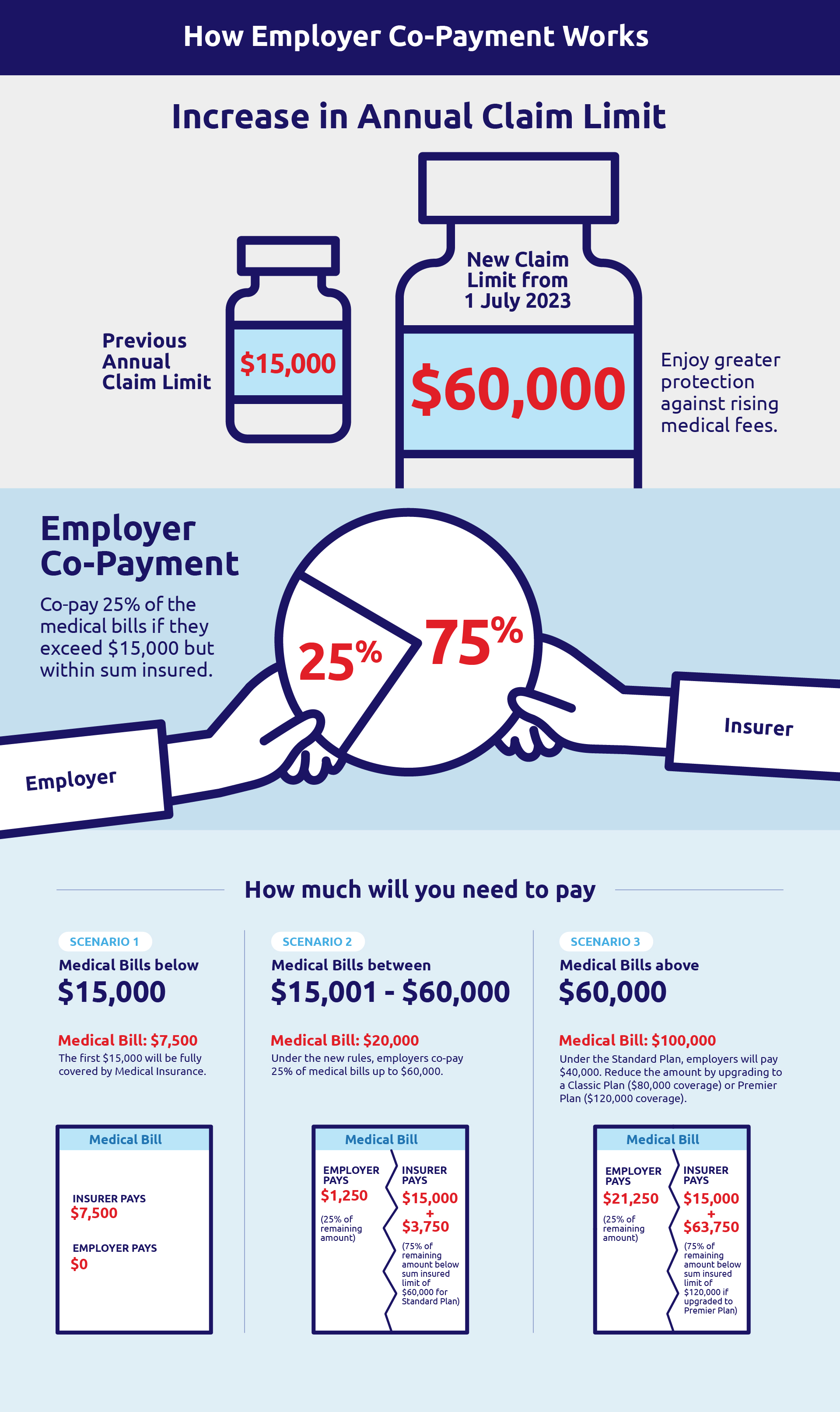
If you would like to lower the 25% co-payment, we offer the flexibility to bring it down to 10% or even 0%. This further reduces expenses borne by employers during medical emergencies.
You will no longer have to pre-pay the entire hospital bill and make a claim later. MSIG will reimburse our portion of the bill directly to the hospital upon admissibility of the medical claim.
There are now different premiums for those aged 50 and below; and above 50. Age differentiation keeps premiums affordable as the majority of helpers tend to be younger.
These improvements are a significant upgrade over what we had previously. The good news is MSIG’s MaidPlus goes above and beyond MOM’s requirements to provide greater insurance coverage and peace of mind. Here are additional benefits you’ll enjoy with MSIG MaidPlus:
We cover up to $3,000 for medical expenses due to injury, which includes sub-limits for dengue fever, dental and TCM treatment.
We cover up to $500 for your helper’s travel expenses if she has to travel home due to the passing of a legal parent, spouse or child.
If your helper has to take compassionate home leave, you will receive compensation of up to $420 for wages and levies.
In the event you have to terminate your domestic worker’s service due to injury, illness or death, we pay up to $750 to engage a replacement maid.
A: Your current MaidPlus policy will not be affected. You do not need to upgrade your policy. MOM’s new regulations apply only to policies that start from 1 July 2023.
A: Hospital and surgical expenses for any pre-existing conditions are covered after the first 12 months of employment with the same employer. Under the new rules, the sum insured will be up to $60,000 with employers co-paying 25% for the portion of eligible claims exceeding the first $15,000.
A: Choose to reduce co-payment to 10% or even 0% by selecting ‘Reduction of co-payment’ at the point of purchase. This option cannot be amended once your plan has started.
A: MaidPlus covers hospitalisation expenses incurred on an overseas trip, provided your helper is travelling with you. However, a separate travel insurance will provide comprehensive cover for any eventualities.
A: When on home leave, your helper will only be covered for accidental death and permanent disablement. All other benefits will cease till she returns to Singapore.
Your helper is an essential member of your family. To protect her well-being and your interest, we designed MSIG MaidPlus to incorporate MOM’s new requirements – and more! Click here to learn more about MSIG MaidPlus and the comprehensive cover we provide.
From time to time, we have exclusive promotions on our insurance plans. View our latest deals here!
Policy terms and conditions apply.
18 Aug 2023
The Monetary Authority of Singapore and the Association of Banks in Singapore have announced on 28 July 2023 on the timeline for the eventual phasing out of cheques in Singapore1.
To support this national initiative, we will be accelerating our move to phase out cheques for both payments and collections. With e-payments, you can make payments conveniently and be assured that your premium payments will reach us promptly and securely, and you will also receive our payments promptly and avoid the delays associated with cheque payments.
Starting from 1 October 2023, MSIG will eliminate cheque collection. Premium payments to MSIG can be made through the following e-payment methods:
| List of Payment Methods | How to Make Payment |
| PayNow |
Please allow at least 7 business days for your policy to be updated when payment is made via PayNow. |
| Internet Banking |
For DBS or SCB account holders only, please select "MSIG Insurance (S) Pte Ltd" as the Bill Payee Organisation and input your 8 to 10-digit policy number (excluding alphabetical letters) in the Bill Reference/Account Number. Please allow at least 7 business days for your policy to be updated when payment is made via Internet Banking. |
| AXS |
Please allow at least 7 business days for your policy to be updated when payment is made via AXS. |
| Telegraphic Transfer (TT) |
Please send TT information with the invoice number(s) that is being for to MSIG for us to match and reconcile for payment clearance. |
Please contact our Customer Services at [email protected] or your usual insurance representative for any further enquiries.
Footnote:


Can’t wait to make new friends, embrace your main character moment, and explore a new city as your home for the next few years? Studying abroad is no doubt exciting and promising! Not only do you learn to be more independent, you get to pursue your academic goals and experience living like a local in a foreign place.
Although we don’t want to burst your bubble, studying abroad does come with the likelihood of increased expenses—from daily living costs to rental fees, the spending game can vary depending on where you’re going. For example, a meal at a Singapore hawker could be around SGD$10, but an average meal in another country might cost more, and that’s just one aspect of your daily expenses.
If you’re not careful, you might find yourself breaking the bank. It’s not easy planning your finances but here are some ways to stay thrifty and enjoy yourself during your study abroad!
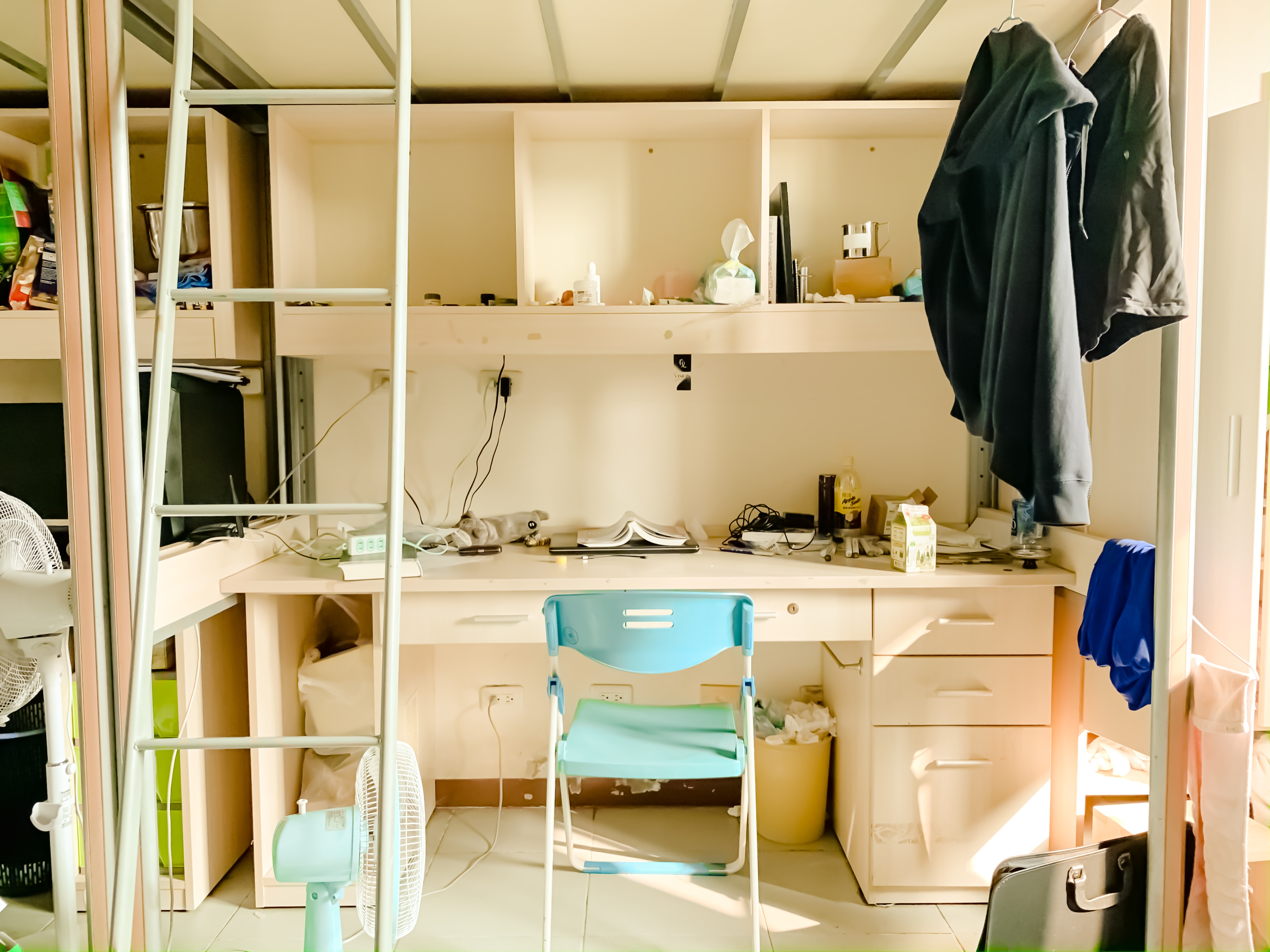
In order to live out your study abroad dreams, you have to first find a place to call your own. Picking the right accommodation is important because your rent takes up a huge proportion of your budget, apart from your tuition fees.
Whether you’re choosing between student hostels or homestays, prioritise proximity to your school and compare prices. You might want to consider opting for a place closer to campus even if it costs you a little more. While the cheaper option sounds like the obvious choice, daily commuting expenses can really add up! Plus, if you’ve had a really tiring day, taking ages to travel home isn’t the most ideal.
Don’t forget to watch out for sneaky costs, like laundry or electricity. If you’re staying in a homestay, you might luck out with a washing machine included—which means that you probably only have to pay for detergent. But do keep an eye out for cleaning fees from homestay hosts too! On the other hand, student hostels might charge you for each laundry load.
We’ve all heard the term “broke student” and there’s a reason for that. Being a student might not come with a hefty bank account, but here’s a silver lining: you’re eligible for the most perks and discounts! Don’t underestimate the small savings from daily essentials—they can be substantial in the long run.
1.Transport
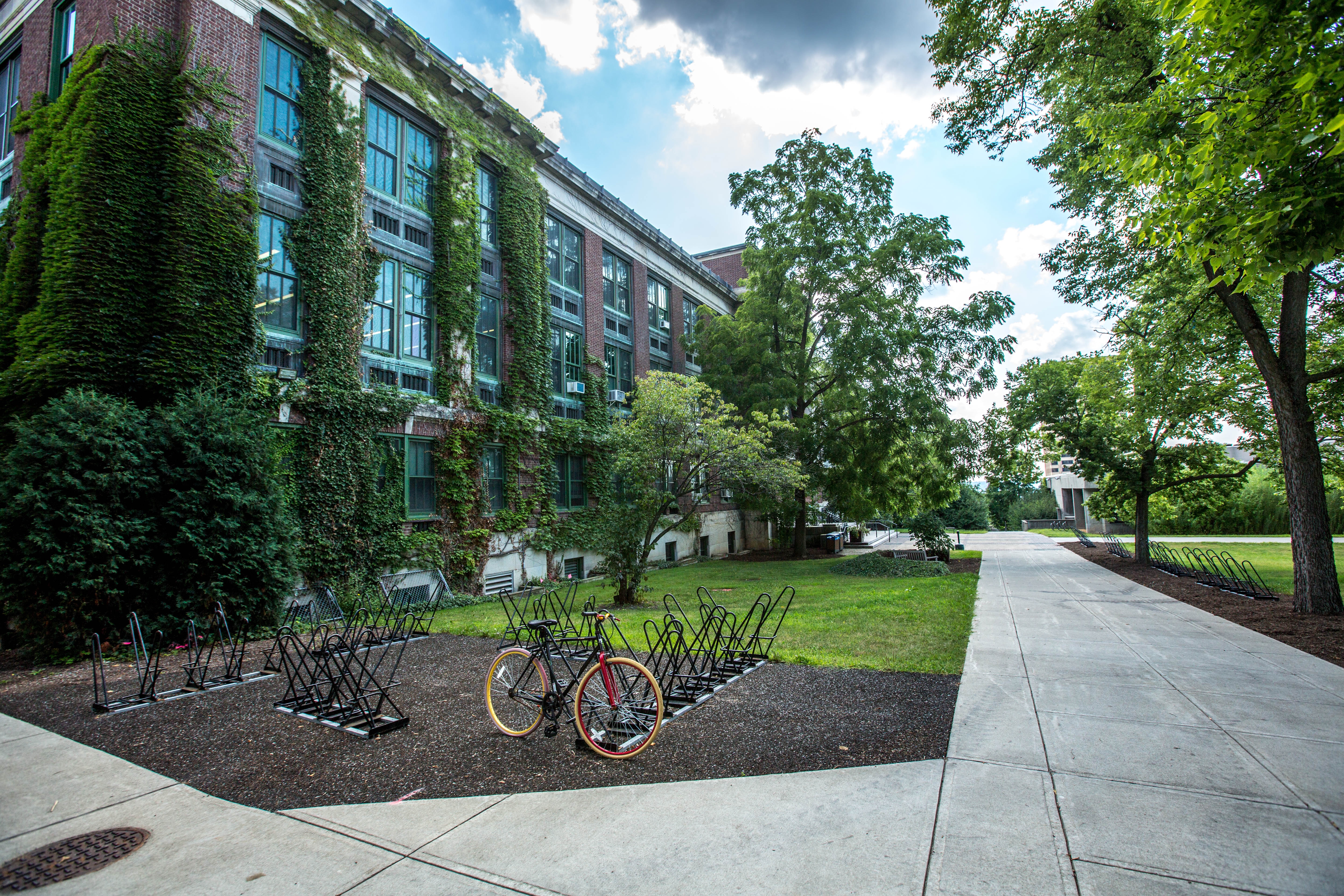
Transport costs can seem insignificant on a daily basis but they definitely add up. Many countries offer student rates for train and bus tickets or even concession passes that are heavily subsidised.
2. Telecom
Being miles away from home means more phone calls to loved ones. International calls can be pricey, but messaging apps have made it easier to connect via the internet. Look for a cost-effective phone plan with sufficient data for video and phone calls, so that you can stay connected while staying within budget.
3. Groceries
The key to saving money is mastering basic cooking. But the real trick? It’s all about being grocery savvy.
Don’t overestimate how often you’ll cook—there will be days where you’ll eat out or when leftovers happen. A good way to avoid bursting your grocery budget is to plan meals for the week and make a shopping list. Here’s a pro-tip: grab frozen meats! They last longer and pack the same nutrients.
Remember to apply for supermarket membership for discounts to help you save too!
4.Laundry
Laundry costs might not be as cheap as you think, especially at a student hostel where each load comes with a fee. Do your due diligence and check on the price of each load and wash in bigger loads to save detergent and money.
If you’re in a country with a colder climate, consider rewearing your clothes too (if they still smell fresh)—smart moves for your wallet!
Semester breaks are prime time to explore your new home. But before you start making travel plans, take the time to research months in advance and secure budget-friendly train or flight deals for your short getaway. For instance, if you’re studying in Great Britain, consider the 16-25 Railcard which gives you one-third off rail fares for a whole year!
You’re likely to spend more on a holiday trip, so plan a reasonable budget by breaking down expenses for various categories such as food, shopping and sightseeing before scooting off. Pack light using a carry-on duffel or backpack so you can save on extra flight baggage fees too.
Lastly, bring your student card everywhere to get discounts at museums, attractions, or even retail outlets! Your bank is going to thank you (a lot).
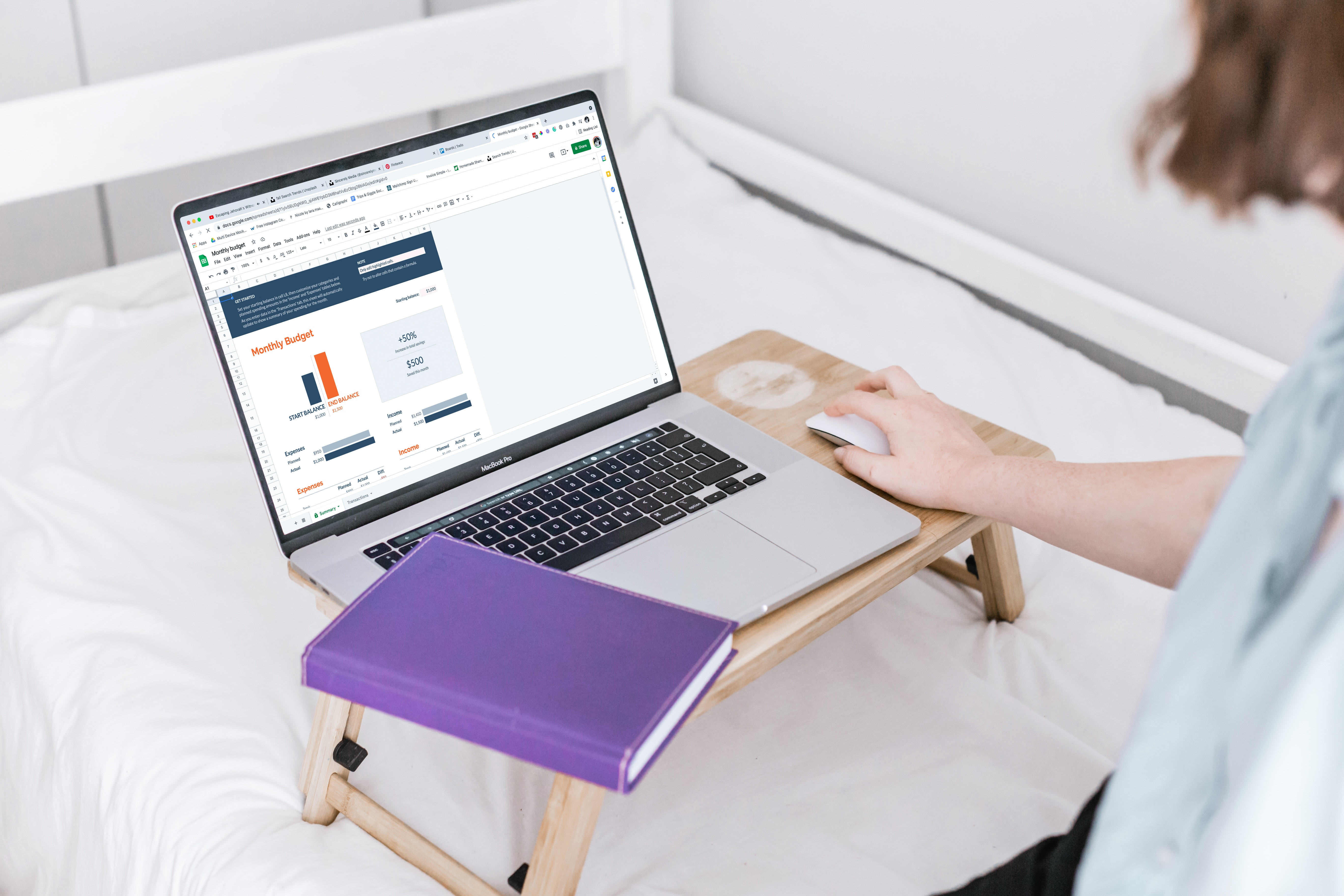
Budgeting is a student’s secret superpower. Taking into account all the mentioned expenses, start creating a monthly budget—encompassing everything, from groceries to transportation, even your daily cup of joe! You might be surprised by how much those coffee runs add up.
Jotting everything down can be a hassle. Try handy budgeting apps that can make your budgeting journey smooth and easy. Don’t forget to set aside an emergency fund after accounting for all your essentials too. Now, you’ll be financially well-prepared to take on your study abroad.
Studying abroad is like unlocking a world of adventure, growth and resourcefulness, but let’s face it—life can be pretty unpredictable. While you're busy exploring new horizons and embracing cultures, unexpected bumps can pop up.
That’s where MSIG Global Study comes in—it’s your trusty travel companion while studying overseas. It provides you with comprehensive coverage for loss of personal belongings, loss of baggage on air transport and even alternative accommodation. Not only does it protect your travels, it also provides up to $150,000 coverage in the event of accidental death and permanent total disability.
It can be daunting to pick up the pieces on your own especially when you’re away from your loved ones at home. Having comprehensive coverage serves as a reliable safety net, providing peace of mind so that when trouble arises, financial relief will be the least of your worries.
Enjoy your study abroad to the fullest while feeling secure with MSIG Global Study: https://www.msig.com.sg/personal-insurance/global-study
*Cover and limits based on Premier Plan.
Relieve your financial burden with Essential Hospital Income insurance! MSIG's hospital plan offers additional health coverage to meet rising medical inflation. This hospitalisation insurance provides daily cash benefits, which are doubled when insured is admitted into the ICU. Our plan also pays for day surgery.
Whether it's a planned procedure or an unexpected emergency, Essential Hospital Income insurance supports you every step of the way. Secure your health and financial stability with our reliable and affordable hospitalisation insurance today!
Up to $400* cash benefits daily if you are hospitalised. Up to $800* daily if you require Intensive Care Unit (ICU) stay.
Get additional support with a lump sum benefit payout for a day surgery procedure.
Focus on your recovery journey upon discharge from the hospital or day surgery and receive a well-wishing bonus of up to $200* per day from us.
Get covered immediately upon approval. No medical questionnaire is needed!
Enjoy 10% discount on total premium when you include your spouse in the same policy.
Choose between monthly or annual premium.
*Cover and limits are based on Premier plan

Our emergency hotline ensures there is always someone to connect you to medical care and evacuation, no matter which time zone you are in.
| BENEFITS | CLASSIC PLAN | SILVER PLAN | PREMIER PLAN |
|---|---|---|---|
Daily hospitalisation cash(up to 365 days per Disability) |
$150 per day | $250 per day | $400 per day |
ICU daily hospitalisation cash(up to 30 days per Disability) |
$300 per day | $500 per day | $800 per day |
Day surgery cash(up to 10 occurrences per Disability) |
$150 per occurrence |
$150 per occurrence |
$150 per occurrence |
Get well cash(up to 5 days per Disability) |
$75 per day | $125 per day | $200 per day |
| No. | Questions & Answers | |
|---|---|---|
| 1 |
Who can enrol for this insurance?
Coverage will cease when insured person attains age 70 on the expiry of the policy year. |
|
| 2 |
What is a pre-existing condition? Any Injury, Illness, condition or symptom which existed before the commencement date of the policy for the insured person concerned, for which treatment or medication or advice or diagnosis has been sought or received or was foreseeable, or which before the commencement date of the policy presented signs or symptoms of which the insured person was aware or should reasonably have been aware. |
|
| 3 |
Is there any waiting period? You cannot claim if the hospitalisation or day surgery for treatment of any Illness occurs within thirty (30) days from the commencement date of your policy or after the thirty (30) days period which were follow-up medical treatment(s), consultation(s) or further investigation(s) of the insured person for the same condition for which he/she received medical treatment or consultation or investigation during that thirty (30) days period, and consequences or complications related to such conditions. |
|
| 4 |
Will I be covered if I lived outside Singapore? The cover lapses if you lived outside Singapore for a continuous period of more than six (6) months. |
|
| 5 |
Can I add my spouse later in the policy? Your spouse can purchase the policy separately if you did not apply together during the first commencement of your policy. In this instance, the 10% discount on premiums does not apply. |
|
| 6 |
What are the policy exclusions? The key exclusions are war and terrorism, radioactive and nuclear activity, pre-existing conditions, routine medical examinations, pregnancy or childbirth or miscarriage, mental illness, dental treatment, full time military service, uniformed groups and occupations excluded under the insurance. The full details of the exclusions are contained in the policy. |
|
This page is for general information only. You should seek advice from a qualified advisor if in doubt. Buying health insurance products that are not suitable for you may impact your ability to finance your future healthcare needs. Full details of the terms, conditions and exclusions of this insurance are provided in the policy and will be sent to you upon acceptance of your application by MSIG Insurance (Singapore) Pte. Ltd.
This policy is protected under the Policy Owners’ Protection Scheme which is administered by the Singapore Deposit Insurance Corporation (SDIC). Coverage for your policy is automatic and no further action is required from you. For more information on the types of benefits that are covered under the scheme as well as the limits of coverage, where applicable, please contact us here or visit GIA or SDIC.


Similar to other parts of the world, Singapore is in the midst of a brutal heatwave, with temperatures hitting a high of 37°C in May 2023 (hot dang!). Temperatures are so concerning that NEA released a national advisory for people to take care while outdoors to reduce the risk of heatstroke.
The scarier part is that this is not a one-off event; it’s expected to continue. Minister for Sustainability and the Environment, Grace Fu, said temperatures across the island might soar to 40°C as early as 2045. This alarming heatwave results from the Urban Heat Island effect, in which urbanised zones experience higher temperatures than less built-up areas.
Because of heat and humidity, Singaporeans rely heavily on air conditioning, with most homes installing multi-room air-conditioning (AC) units. To us, retreating indoors and blasting the AC is the most obvious solution on a hot day. We stay cool – but at the expense of raising our electricity bills and harming our planet by, ironically, creating a “Catch-22” paradox.
Thanks to HDB’s foresight, sustainable efforts to combat the heat such as silicon-based roofs and district cooling are underway. Meanwhile, how can we stay cool at home while waiting for these initiatives to be completed?
Get creative and try these 5 easy ways to heat-proof your home without the financial burden or hassle of remodelling your home.
Besides warming up your home, sunlight entering through your windows can harm your skin and furniture. Using blackout curtains or blinds when the sun is out can lower the temperature in your house by up to 5°C.
For greater effectiveness, use light-coloured curtains or blinds to reflect more light, and avoid thicker curtains as they trap heat. An alternative is getting window films, with the tinted ones offering the added benefit of privacy.
Don’t mistakenly turn your house into a furnace. Closing all doors and windows to shut heat out can actually cause a reverse effect. Instead, keep the air moving. Enable cross ventilation by opening doors and windows at opposite ends of your home to produce a cooling wind tunnel.
Turning on a fan can help with directing airflow. (Sadly, “aesthetic” bladeless fans aren’t that effective.) Ceiling fans are particularly helpful. When set to spin counter-clockwise, they direct cool air downwards. Apart from lowering your electricity bill, because they cover a larger surface area, ceiling fans can cool down your room by up to 5°C.
Incandescent light bulbs generate a higher temperature due to using tungsten wires. It may be affordable, but its usage leads to spending more on electricity and cooling. On the other hand, LED bulbs use less energy, last longer and light up a room without heating it.
Did you know that simply leaving our appliances running can warm up your home? Electricity produces heat, and the collective heat from all plugged-in appliances adds up. Turn off switches when not in use to cool the house down while preventing risks of spontaneous fires from short-circuiting.
Some appliances like washing machines and dryers emit alarmingly large amounts of heat. Consider using such appliances at cooler times of the day, like in the morning or at night. If you need to dry your clothes during the day, why not take advantage of the natural blazing hot sun?
Ever wonder why perspiring in Singapore feels so unpleasant? In humid Singapore, the air is too saturated with water to evaporate the moisture on your skin, trapping the heat within your body. This leaves you feeling sweaty and sticky instead of relief.
Dehumidifiers cool the room down by lowering its relative humidity level. They also protect your household items and improve cleanliness by making the space unconducive to mould growth and pests.
Before purchasing your dehumidifier, consider the space you’ll be placing it; the larger the room, the larger the dehumidifier should be. Optimise its effectiveness by placing it in the centre of the room, clear of obstructions like walls or furniture.
An alternative for homeowners with green thumbs is indoor plants. They bring the humidity to optimum levels while cooling the air during transpiration. Additionally, plants purify and freshen the air around them when they emit oxygen during photosynthesis.
We recommend these cosy HDB-friendly houseplants to bring you joy and cooling comfort to your home without too much maintenance:
With these handy cooling tips, braving the heat will be a breeze. Aside from feeling more comfortable, you’ll protect your home’s residents and objects from damaging UV rays. But for absolute surety that your home is secure, take the added precaution of safeguarding it with reliable home insurance.
MSIG Enhanced HomePlus® insurance offers all-around protection for your home and household contents. Our policy provides comprehensive coverage for home-related accidents, from renovation mishaps to furniture damage to even the loss of domestic pets.
From time to time, we have exclusive promotions on our insurance plans. View our latest deals here! Policy terms and conditions apply.



With COVID-19 behind us, overseas trips are a norm again. Travellers are planning more getaways to catch up on lost time and creating long-lasting memories abroad is a priority for many families.
While a multigenerational family vacation may sound like a great idea, hitting the road with younger children and older folks can be challenging. Everyone has their own set of demands, from accommodation to activities, and to dietary restrictions. But, fret not. We have prepared these travel tips so you can plan ahead and have a good time.
An Insta-worthy hotel may fill your feed with cool photos. But is it child- and elderly-friendly? For example, a see-through bathroom with glass walls may look swanky, but your conservative parents may not appreciate it at all.
When searching for accommodation, check if the location, facilities and amenities cater to both young and old. Does the hotel have an elevator? Do they have child-friendly rooms? Do they provide amenities for the elderly? Comfort and convenience should be your top priority.
Keep in mind the interests of all age groups when planning your itinerary. Mix up your sightseeing with cultural excursions, outdoor adventures and leisurely pursuits. Everyone should have a chance to do something they love.
Listening to their suggestions creates an inclusive experience. Everyone gets involved and the chosen activity feels more meaningful, fostering closer ties between your family members.
Fast food or street food? Western or Asian? Select restaurants with menus for all ages and dietary requirements, so everyone has something that suits their palate.
While exploring local specialties, it’s good to have familiar food available as well. Also, let family members take turns in selecting where to eat – eg. kids decide on the lunch venue while grandparents dictate the dinner destination.
No one wants to fall ill away from home. It’s a lifesaver to bring along medication for headaches, flu or diarrhoea. To avoid confusion, carry the medication in their original containers or label them with proper dosage and directions.
Don’t forget to bring along pills for your parent’s chronic conditions. Keep a copy of the prescription just in case you need to purchase medication along the way. You can also take note of pharmacies and medical facilities near your hotel, in case of emergencies.
Have a flexible schedule and don’t pack in too many activities. Children and elderly move at a slower pace, so cater for that. The last thing you want is to rush about and feel overly stressed and create an unpleasant scene for everyone.
With extra time in your schedule, you can easily accommodate any unexpected changes or surprises if they arise. It’s perfectly okay if you don’t follow your itinerary closely. Just chill, relax and go with the flow.
You’re on holiday, after all!
You can have a smoother family trip by following these tips. But for total peace-of-mind, it’s essential to purchase travel insurance that covers all your family members, from young to old, and even your domestic pets at home!
Start planning your multi-generational getaway with MSIG TravelEasy® insurance and rest assured that your loved ones will travel safely.
From time to time, we have exclusive promotions on our insurance plans, click here to view the latest deals. Policy terms and conditions apply.


Let’s face it. We are all getting old!
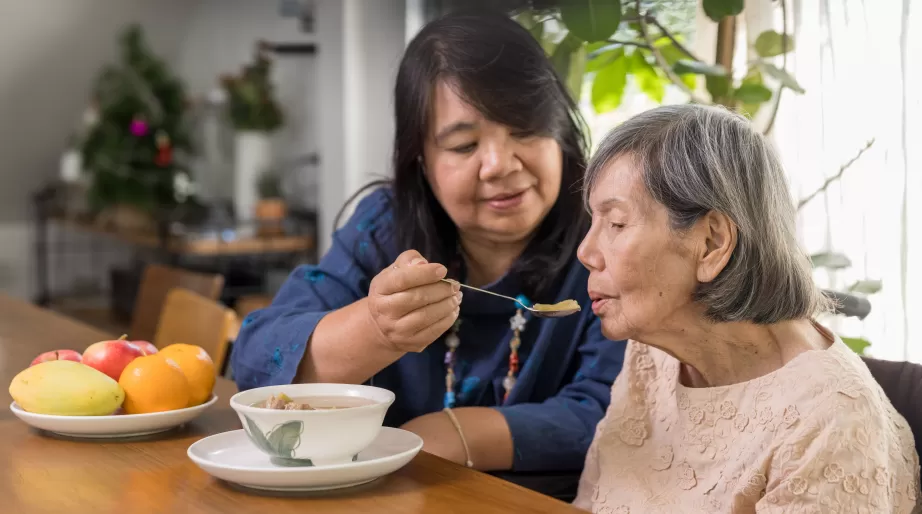
As our aged population grows, so does the demand for eldercare services. As most of us are busy with work, more households are turning to foreign domestic workers (FDWs) to care for the elderly.
Yet, eldercare is far more physically, mentally and emotionally challenging than it seems. Ageing has many complexities that only trained caregivers can handle calmly and efficiently. Many employers underestimate the specialised skills required to care for the elderly and hire ill-equipped domestic helpers. A 2023 study by SingHealth Polyclinics (SHP) found that almost half of foreign domestic workers (FDWs) hired to care for the elderly lack adequate skills.
Looking for someone to care for your elderly loved one(s)? Start by asking yourself these questions:
It’s wise to do a thorough background check before approaching the agency. Select a reputable company from the Ministry of Manpower’s list of licensed agents. While an experienced agency may not guarantee the highest quality maids, it may assure you that they won’t cease operations abruptly.
Take the time to call up the agencies you’re interested in to inquire about their screening processes. An agency that screens its candidates thoroughly will more likely find you a quality eldercare helper best suited for your family’s needs.
Exercise prudence and look through the listed agency’s website or social platforms, if they are available. A company with a good online presence shows that they’re not afraid of being transparent – and that’s always comforting.
Reviews from others who have used a service are a foolproof way to understand a company’s standards. Better yet, ask friends and family members for personal recommendations for maid agencies.
Firstly, we need to establish that a domestic helper and a caregiver have different job scopes.
A domestic helper can assist with caregiving duties, but she may not have the proper skills to deliver care safely. Her main role is to take care of the house. Conversely, while a caregiver can assist with housekeeping duties, her main responsibility and expertise is administering care, for which she would have undergone formal training.
A certified eldercare helper would be competent with basic medical procedures like first-aid, measuring pulse rate, giving medication and preparing healthy food according to dietary restrictions. Eldercare courses often impart skills in caring for the elderly suffering from stroke, dementia, diabetes, Parkinson’s or cancer. These skills would be extremely beneficial if your relative has any of these conditions.
Prioritise finding an eldercare helper that fulfils your requirements over the most ideal one. Getting a qualified and experienced eldercare helper can be advantageous as she would have the knowledge and experience in dealing with different elders and situations. But, a fresh eldercare course graduate can be equally capable too.
Knowing the specific care needed for your elderly helps you decide whether you need an eldercare helper. How mobile is this family member? Can he/she perform day-to-day tasks independently? Is there a chronic illness? Is he/she recovering from surgery/injury and requires rehabilitation?
Also remember: domestic helpers and caregivers have different responsibilities; one person should not be expected to fulfil both roles. Setting these expectations at the start ensures your eldercare helper is able to focus on her primary role and is treated fairly. Your eldercare helper should still work reasonable hours where she can get enough rest to perform her tasks well. She is also entitled to a day off per week to properly relax and socialise.
Assess if the eldercare helper is fluent in the same language/dialect as your family members. Barriers to communication can lead to frustration and tension. The FDW should be able to communicate effectively with the elderly, keeping them company and administering proper care.
On your part, understand that as this isn’t the helper’s first language; her vocabulary is limited. Keep your instructions as simple as possible. Be patient and ready to help her if she has any language-related questions.
We hope these tips will help you select the right eldercare helper for your family to provide the right care for your elderly. While she dedicates herself to caring for the elderly, protect her well-being with MSIG MaidPlus insurance.
Our policies have been updated to reflect MOM’s latest requirements that safeguard not just FDWs, but also the interests of employers. Click to learn more about MSIG MaidPlus insurance and the comprehensive coverage we provide.
From time to time, we have exclusive promotions on our insurance plans. View our latest deals here!